Good news for Floras Lake
The good news about a plan to destroy one of the most amazing stretches of Oregon Coast came in waves this week.

First, Oregon State Parks and Recreation Department director Tim Wood sent a letter to the Curry County Board of Commissioners. In the letter, Wood essentially told the commission that, while the county had every right to submit a formal proposal for their plan to develop a pristine and beautiful section of Oregon Coast into golf courses, such a plan was highly unlikely to meet the Oregon Parks and Recreation Department’s extremely high standards for land swaps. The county’s plan, you may recall, involved swapping 68 acres of county land for 627 acres within Floras Lake State Natural Area.
“The ‘overwhelming public benefit to state parks’ standard is an extremely high bar,” Wood writes, “set to ensure that any trade or sale of state park property is unquestionably in the best interest of Oregonians as a whole…”
His letter then goes on to say that Floras Lake State Natural Area is a “unique and wondrous” treasure, and that the value of this property is “irreplaceable.”
“While I would advise the (parks) commission to provide the county the opportunity to present a proposal for this project should you desire to do so, I sincerely believe that there is no proposal for sale or trade of this property that would meet the standard established for such transactions.”
That is exactly the kind of response I was hoping to hear from OPRD, the kind of response that could essentially kill this misguided proposal on the spot.
Judging by a story in the Oregonian today, Wood’s letter did just that. The headline alone says it all:
“Curry County pulls the plug on plan to build golf course in Floras Lake area.”
Many thanks, then, not only to Tim Wood, OPRD, and the Oregon State Parks and Recreation Commission, but to everyone who opposed the county’s plan and supported preserving this truly incredible and unforgettable place. There will be no regrets.

Too much to lose: Floras Lake and Blacklock Point 2
After yesterday’s post about Curry County’s efforts to destroy a stretch of coast between Floras Lake and Blacklock Point in southern Oregon, I was curious to hear how a public meeting on the issue went last night.
Ann Vileisis, president of the Kalmiopsis Audubon Society, and her husband, Tim Palmer, sent out a nice recap of the meeting this morning and said it’d be fine for me to share it with anyone and everyone who’s interested in saving this pristine stretch of the Oregon Coast.
 It sounds as if the opposition turned out en masse, which is great. It also sounds, however, as if the county is going to press ahead despite this. They plan to make an official proposal to the Oregon State Parks and Recreation Commission at the OSPRC’s next meeting, which is scheduled for Wednesday, November 16, in Hood River. Stay tuned.
In the meantime, here’s Ann’s recap of the meeting last night:
I know that everyone who couldn’t make to last night’s big meeting in Gold Beach is curious about what happened. In short we did great! We counted forty-six people who spoke against the state park swap/golf resort proposal, two who spoke for it, and three who were neutral.
When we arrived, we saw that the youth-golf BBQ hadn’t amounted to much, and though we’d expected supporters to show up this time, they didn’t.
Rather than the question-card format that the county commissioners’ office had told us would be used, they set out a sign-up list for people who wanted to speak.
Strangely, after Commissioner Rhodes welcomed everyone, he started calling on people to make comments straight away.
After two people made comments opposing the proposal, Dave Lacey piped up and said: “Hey, aren’t you going to show us your proposal first so that we can make comments after we see it?”
Everyone applauded, and so Commissioner Rhodes shifted gears and presented his proposal with basically the same power-point that he’s already shown at the three town hall meetings. There was no new information. The names of the developers were not divulged. He emphasized how gorse would take over the land under state park management. He said that the Curry Commissioners wanted to make their official proposal to the State Parks commission at their meeting in Hood River on November 16.
After his presentation, Rhodes began to call citizens’ names again, and, one by one, people took turns making statements.
They were fantastic. From Langlois, Port Orford, Gold Beach, and Brookings, citizens made comments that were articulate, thoughtful and respectful –and covered all manner of arguments and concerns.
People talked about the special values of Floras Lake and Blacklock; about what a waste of time this whole process was; about the need to come up with a viable solution to the county’s fiscal crisis rather than continuing to pursue this pie in the sky proposal; about how the proposal would not meet the criteria for a state parks land exchange; about the secrecy of the proposal; about the need to raise taxes to a fair level; about how disappointed we were to STILL not know any more specifically about the proposal or the prospective developers; about how gorse would be exacerbated by development; about how public state parks lands should not be traded away for private development, and much, much more.
There were many high points as speakers emphasized different reasons that they oppose the proposal– with humor, heartwarming personal stories, or hard-hitting statements that seemed to just NAIL the key points. Many different perspectives were voiced, and I think it was utterly impressive.
Only one person clearly supported the proposal, contending that this was an important economic opportunity for the county, that Herb Kohler builds top-notch golf courses, and that environmental regulations had shut off access to Curry County’s natural resources. A man representing Curry Homebuilders Association praised the commissioners for trying to do something. One person from Bandon Dunes said that golf courses could be environmentally friendly; and another man introduced himself as an engineer and explained that he’d be doing a “scientific poll” to determine what people in Curry County actually think. That was a little odd–since his motive, authority, funding support, or background were not revealed.
All in all, it was an extraordinary meeting. Once again citizens from all over the county expressed resounding opposition to the idea of trading away a state park to create a private golf resort. Many people agreed that this evening was a milestone for Curry County in terms of having so many people speak in support of conservation and state parks.
Yet at this point, it looks like our County Commissioners will continue to press forward. Their motives and expectations remain a mystery to us. So please stay tuned, and make sure to write letters to the state parks commission, and encourage your friends to do so, if you’ve not already done so.
(http://www.oregon.gov/OPRD/commission-floras.shtml)
Thanks to everyone for your help and support. It takes all of our voices and ideas to defend the extraordinary values of this magnificent place we call home.
Ann and Tim
Too much to lose: Floras Lake and Blacklock Point
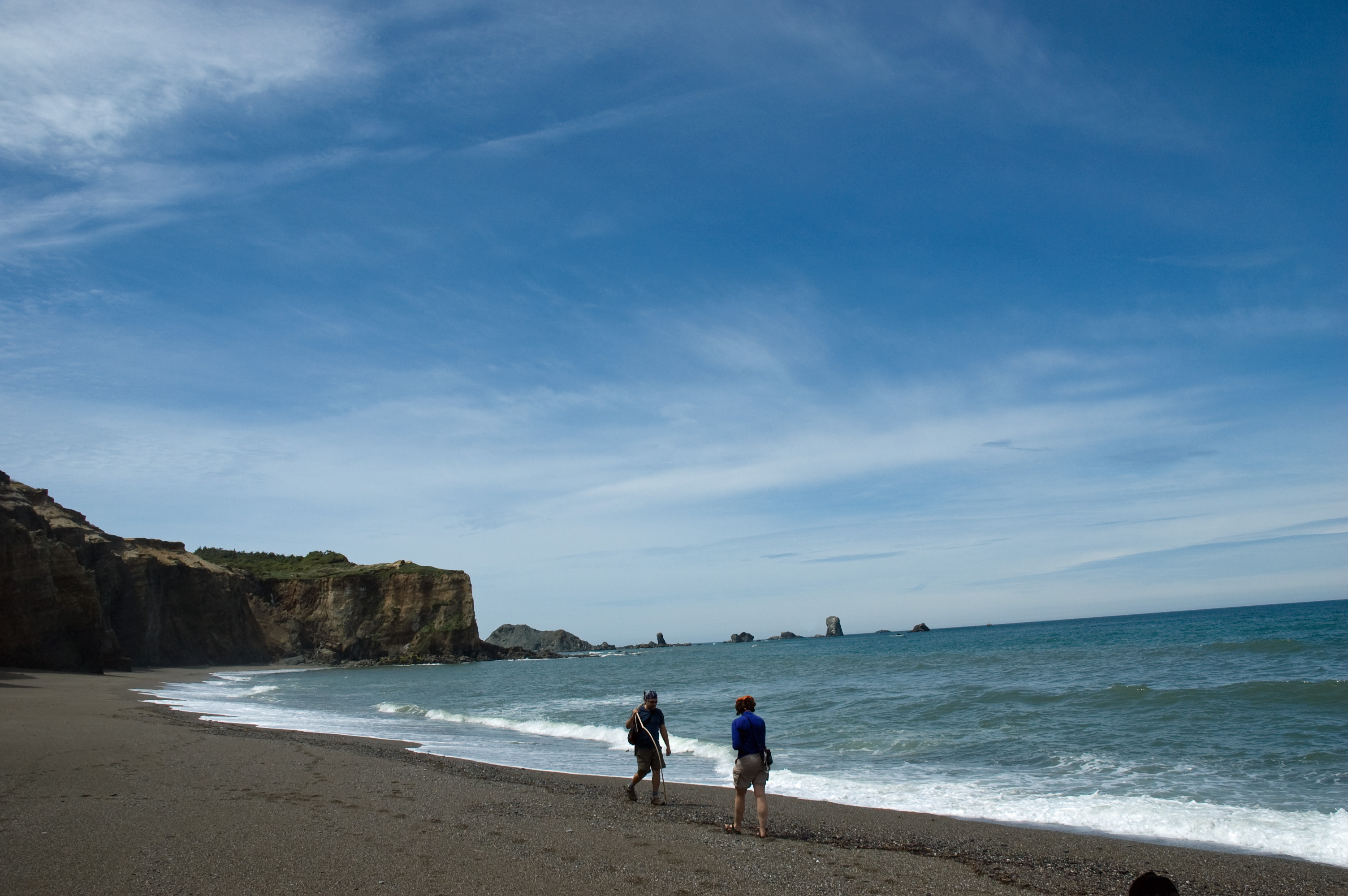
There is a place on the southern Oregon Coast where a cool Pacific breeze blows almost constantly off the steel-blue waters of the ocean, fanning out over fine brown-gray sand, bending and swaying long green blades of dune grass, brushing and bowling through stubby shore pines and tall inland Sitka spruce, reflecting off tawny sandstone cliffs that rise and tower over the wild shore. It is a place where purple and orange starfish and green anemones linger in salty tide pools, where seals spy and brown pelicans soar; a place where gray whales spout off in the distance and blue herons sail overhead.
Gazing from some lookouts, a near glimpse of the earth’s graceful curve; from others, waterfalls and crashing, foaming surf. There are occasional, subtle, tolerable signs of man: forest trails, colorful, far-off kite surfers, a small fishing boat, the clockwork pulse of the Cape Blanco Lighthouse under black skies spilling with stars.
Otherwise, this place, a sliver of shoreline south of Bandon near the tiny town of Langlois, is about as wild and as beautiful and as natural a place as is to be found along the entire Oregon Coast.
And yet, if commissioners from Curry County have their way, this place — it’s not hyperbole to summon the sacred here — would be cleaved and cleared, paved and pounded, planted with rough and greens, pocked with bunkers, soaked in poisons, manicured, homogenized and standardized, all in the name of a little white ball and a big green dollar bill.
Yes, the commissioners from Curry County, fearing for the solvency, maybe even the very existence, of the entire county, want to develop some of the most pristine and breathtaking land on the entire West Coast into . . . golf courses.
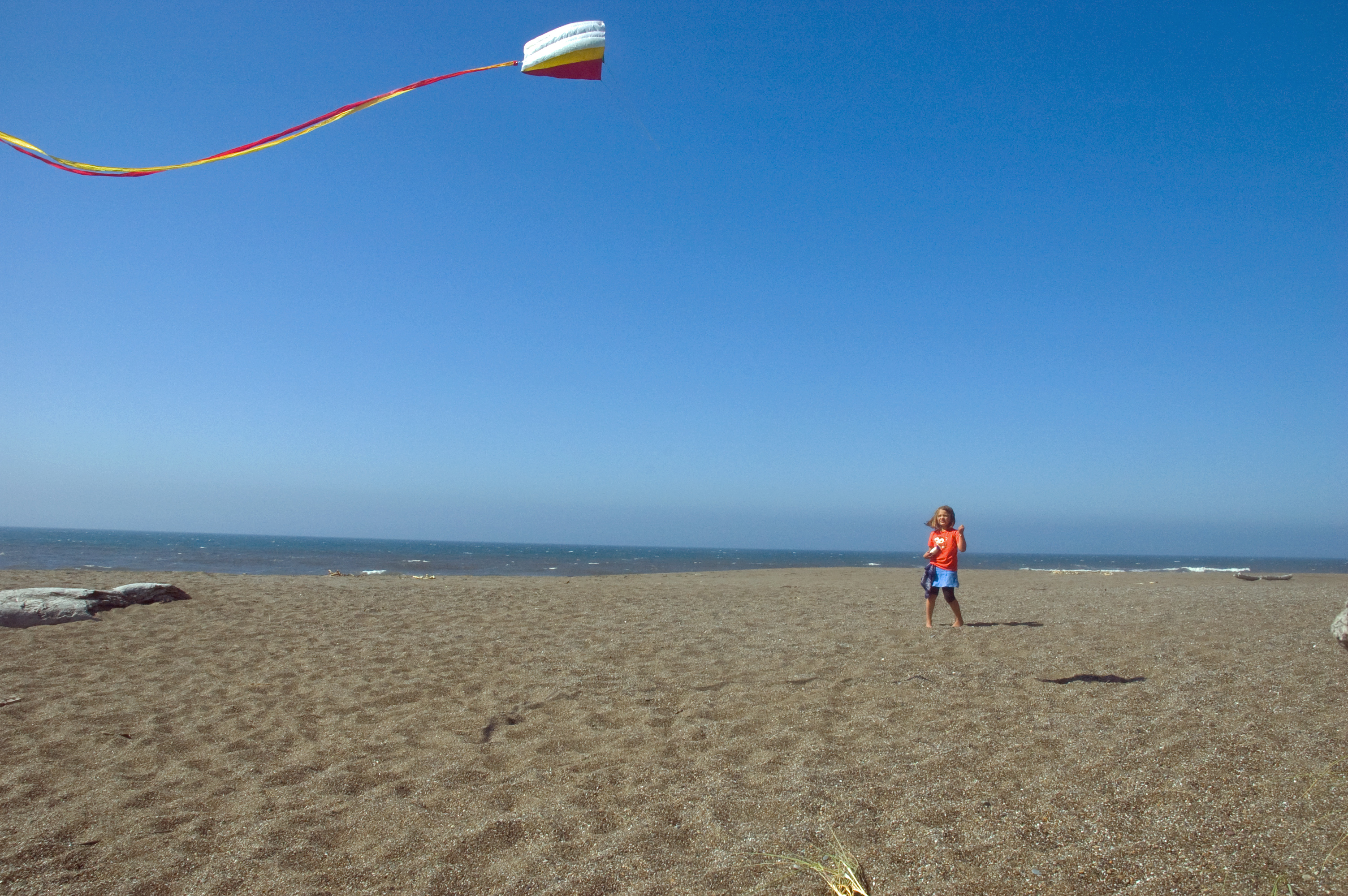
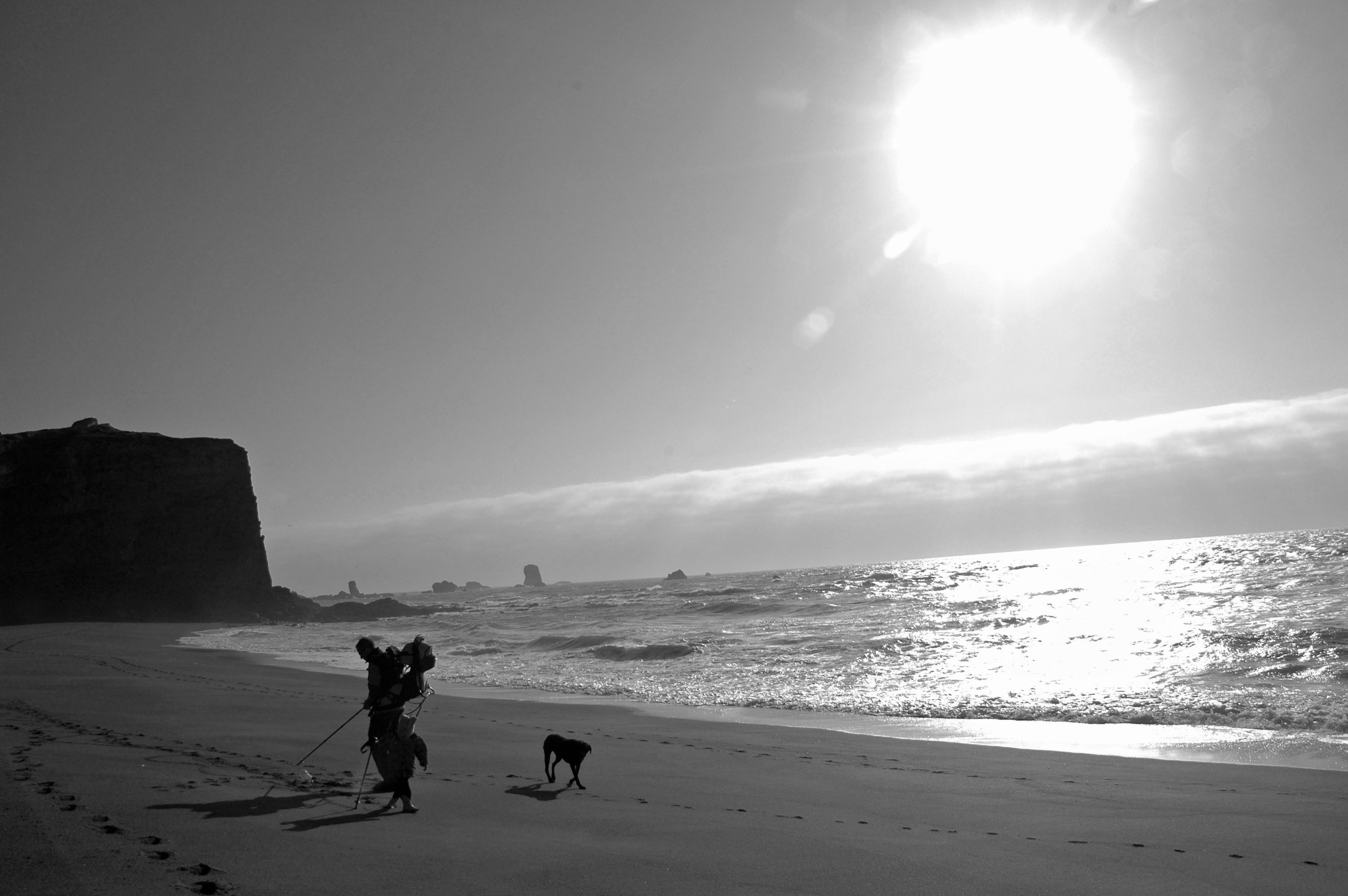
This so far informally proposed travesty came to my attention, coincidentally, on the very night that I returned home after an annual three-day backpack to this stretch of Oregon Coast with my family in late August. We’d just spent days in the sunshine, strolling the familiar sands — we’ve been coming back here for close to a decade — taking in the fresh ocean air, flying kites, slowing down, simplifying, refreshing. Late that night back at home, a headline in the Oregonian caught my eye. Its story dropped my jaw.
The short version: Curry County commissioners want to swap 68 acres of county land for 627 acres of Floras Lake State Natural Area, which has been part of the Oregon parks system since 1943. Through the swap, the county would create a new, 1260-acre county park. The land would be leased to a developer, who would then ransack it with two golf courses. One rendering shows a manicured green and two bunkers squarely on top of a dramatic sandstone plateau overlooking the Pacific. It is a landmark we know well.
The proposal also imagines an interpretive center — for what is a natural and scenic area without a center to interpret it? — and “improved” trails. Based on the county’s concept plan, that appears to mean paved.

All of this, the county supposes, would “create accessibility to public lands” and showcase “ecologically sound land management” and “preservation of native species.” It would also, in bold red letters, lead to “job creation” and “direct revenue for the general fund.”
To me, the entire idea is absolutely galling. Nonsense.
Thankfully, I am not alone. Public opposition seems to far outweigh support. Conservation groups such as the Kalmiopsis Audubon Society, the Oregon Shores Conservation Coalition, and the Portland-based Crag Law Center, all have lined up in opposition. And not only do people question the financial projections and oppose the destruction of this one-of-a-kind treasure, but there is a fishy odor in the air — and it’s not coming from the Pacific.
For months, the commission kept its proposal — and its work with potential developers — behind closed doors. In late June, the Oregon State Parks Department discovered 16 pits within the Floras Lake State Natural Area that had been illegally excavated with heavy equipment. The pits were discovered over an 8-mile section of trail between the southern edge of Floras Lake and Blacklock Point, which just so happens to be the area under consideration for development. No one seems to know who did it; as of today, Oregon State Police are still investigating.

This misguided proposal seems like a long shot for another reason, as well. According to the Oregon Parks and Recreation Department, projects that transfer state park property out of the park system are rare and must meet a high standard — providing “overwhelming benefits to the state park system.” This proposal does not meet that standard at all.
Still, the very fact that this idea is out there and that it’s being given official attention is, at the very least, troubling. It’s also an idea that you hear over and over again. Repackaged, maybe, but the gist is always the same: Develop — i.e. destroy — our most wild, pristine and beautiful places in the name of economic progress and increased access. It’s been tried on Mount Hood. It’s been suggested for Mount Adams. It’s come again now to the Oregon Coast.
Well, not this time. Not this wild, beautiful and scenic place. This one is too close to me. It’s too important. It is too much to lose.
Every time I come here, I am awed. We’ve been bringing our kids here practically every year since they were born. We will keep bringing them here, and one day — imagine — they may bring their kids here, too.
And it won’t be to play golf.

The Curry County Commission is holding an informational meeting at 5 p.m. today, Sept. 14, in Docia Sweet Hall of the Curry County Fairgrounds in Gold Beach. Members of the Oregon State Parks and Recreation Commission will be in attendance to hear details of the county park proposal.
Opposition comments can be submitted at any time to Chris Havel at the Oregon State Parks and Recreation Department (chris.havel@state.or.us) and to Curry County Commissioners George Rhodes (rhodesg@co.curry.or.us), Bill Waddle (waddleb@co.curry.or.us) and David Itzen (itzend@co.curry.or.us).
More information is available at the ODPR Floras Lake and Blacklock Point page and at www.savefloraslake.com
Camping lesson
The Mount Hood National Forest was host to one hell of a party a few weeks ago.
We’d pitched our tent in a favorite area out near the rushing Sandy River, a place we’ve spent many a night over the past few years. The specific spot that we usually favor was already taken when we rolled up, but no worries. There were a few other options nearby, and the one we landed in boasted a nice view of the mountain through the trees and more shade than the old faithful spot.
This place has been great to us ever since we stumbled on it a few years ago. Because it’s not a campground, but instead a handful of dispersed sites, it’s relatively free of the crowds that flock to the more developed areas. And though you don’t have to hike in to get to it, it’s got a measure of serenity and beauty that almost hints at wilderness. Plus, the river’s just a short jaunt away.

Once we had our camp on in the late afternoon hours, the cars started rolling by. First one. Then another. And another. A Jeep with four young guys in it. A pickup truck rumbling with bass. A little sedan that had no business on such a rough road weighted down with folks.
The party, in the site a couple down from us, kicked off as the first cars pulled up. A car door would slam, some loud greetings would exchange, and then the beverages would crack open. I know how it works. I’ve been to my fair share of those, especially back in the pre-21 days. This was one of those.
It raged throughout the night, as the sun set, the mountain faded, the stars shone. Loud laughter, obnoxious machismo, breaking glass. Because we were a few sites away — and because we remembered what we had been like at that age — it wasn’t so bad. Just different than our normal escapes up there. Louder, mainly. And surprisingly, we just about outlasted the rowdies. By the time we retired from our own quiet campfire, it was pretty close to silent throughout the woods.
The next morning, the same cars we’d watched roll in the night before rolled back out in the early morning sun. My five-year-old daughter and I took a walk down the dusty road to survey the damage. And that’s when I changed from a slightly annoyed but somewhat understanding neighbor into an incredibly disappointed and perturbed curmudgeon. There was trash along the road, broken glass in the bushes. A pair of pants with who knows what on them sat crumpled up under a tree. Toilet paper streamed from the manzanita, camping chairs lay broken and bent on the ground, and the last car to leave loaded up the fire pit with trash, set it ablaze and drove away.
It was not pretty.
It needed to be cleaned up. I didn’t want to do it, but I knew we’d probably be back up for another weekend sometime this summer. I also knew that the Forest Service had been tolerating these unregulated sites, but that they were beginning to rethink that approach. Posted on all the sites in the area, for the first time since we’d camped there three or four years ago, were some unfortunate signs.

After mulling it over at breakfast and not being able to leave it alone, my daughter and I grabbed some plastic bags, headed back over to the trashed site, and cleaned it up. Five garbage bags, two wrecked camping chairs and a couple bucks worth of returnables later, it looked hospitable again. Probably still needed a good rain before I’d pitch my tent there again, but it was on its way.
I’d like to think that when I was that age, I would have been a little more conscientious about the things I did and didn’t do, but to be honest, I’m not sure I would have. Back then, a lot of it was about having new fun and, sometimes, not holding onto any evidence. I understand that. But years later, my perspective has swung over to the other, more adult and responsible side; the side that cannot fathom how anyone could leave a campsite just a few hundred yards away from the Sandy River and with a lovely view of Mount Hood in such littered disarray.
Who knows how many more scenes like that the Forest Service will have to walk up on before they do actually close those beautiful sites to everyone. I consider myself lucky to have found a place like this, to be able to enjoy an escape like this.
It’s easy to take these places for granted. It’s best not to.
Mount Hood National Park?
Thirty-one years ago today, Mount St. Helens blew away 1,300 feet of its upper reaches, bowled over and scorched 230 square miles of forest , and killed 1,500 elk, 5,000 deer and 57 people in the most devastating volcanic eruption in the history of the United States.

Traversing the summit ridge of St. Helens, June 2009.
In the wake of the eruption, St. Helens and the land surrounding it was designated a National Volcanic Monument, which preserved the area in a relatively natural state while also providing opportunities for scientific research, tourism and recreation. But dwindling federal budgets — the Forest Service is the agency in charge of the monument — have led some groups to advocate for national park status for Mount St. Helens.
In fact, today, in commemoration of the 1980 eruption, the National Parks Conservation Association, the Cowlitz County Tourism Bureau, EcoPark Resort, and other supporters are staging a press conference to renew the call for a Mount St. Helens National Park.
So how does this relate to Mount Hood?
Since about the mid 2000s, there has been a similar campaign pressing for a Mount Hood National Park.
Launched and guided by Portlander Tom Kloster, a transportation planning manager at Metro, the Mount Hood National Park Campaign posits that the Forest Service, which oversees the Mount Hood National Forest, has been charged with an impossible task: to simultaneously protect the mountain and exploit it through timber sales, energy corridors and the like. Turning the area into a national park, according to the campaign, would put it under the auspices of the National Park Service, an agency guided by a much clearer mission . . .
“…to conserve the scenery and the natural and historic objects and the wildlife therein and to provide for the enjoyment of the same in such manner and by such means as will leave them unimpaired for the enjoyment of future generations.”
It is an interesting idea to be sure, and one that, to those of a more conservation-based persuasion, would seem to be a worthwhile endeavor.
The campaign’s web site and Kloster’s accompanying WyEast blog make a strong case for national park status. There would, of course, be lots of opposition from timber companies — even though the annual cut in the Mount Hood National Forest is now a fraction of what it once was — utility providers, off-road vehicle groups and many others. The hordes and the accompanying amenities I’ve encountered at many national parks like Yosemite and the Grand Canyon also make me wonder just what Hood might turn into as a national park.
But I’m a big fan of protecting beautiful places, and Mount Hood, to me, is worthy of protection. If making it a national park would help accomplish that, I’d be all for it.
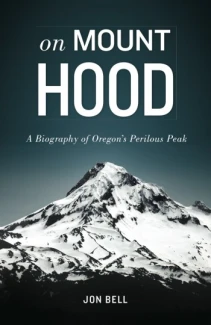
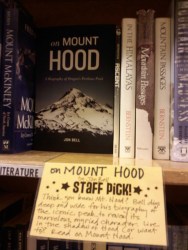
 On MOUNT HOOD