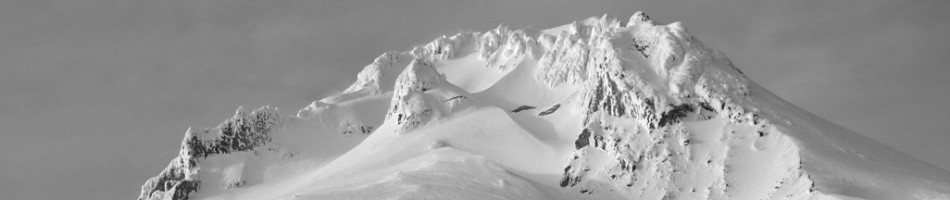
Mount Hood Railroad
The boy’s a big fan of trains, as so many little boys are. And while we haven’t yet made the trip on the Mount Hood Railroad — maybe next Christmas for the Polar Express — we did get our fill of big engines out near the mountain this past weekend while camping at Memaloose State Park.
Threaded in between I-84 and the railroad tracks along the south side of the Columbia River a few miles east of Hood River, Memaloose is actually a fairly scenic spot, assuming you get one of the campsites with a commanding river view. But even if you do get a money spot, there’s really no escaping the noise — the constant din of highway traffic to the south, the regular, repeated rumble and roar of trains just one blackberry thicket away. What’s more, there’s another set of train tracks just across the river in Washington, which adds even more railroad action throughout any stay at Memaloose. Some people might find it a little too noisy.
Others, not so much.

Too much to lose: Floras Lake and Blacklock Point
There is a place on the southern Oregon Coast where a cool Pacific breeze blows almost constantly off the steel-blue waters of the ocean, fanning out over fine brown-gray sand, bending and swaying long green blades of dune grass, brushing and bowling through stubby shore pines and tall inland Sitka spruce, reflecting off tawny sandstone cliffs that rise and tower over the wild shore. It is a place where purple and orange starfish and green anemones linger in salty tide pools, where seals spy and brown pelicans soar; a place where gray whales spout off in the distance and blue herons sail overhead.
Gazing from some lookouts, a near glimpse of the earth’s graceful curve; from others, waterfalls and crashing, foaming surf. There are occasional, subtle, tolerable signs of man: forest trails, colorful, far-off kite surfers, a small fishing boat, the clockwork pulse of the Cape Blanco Lighthouse under black skies spilling with stars.
Otherwise, this place, a sliver of shoreline south of Bandon near the tiny town of Langlois, is about as wild and as beautiful and as natural a place as is to be found along the entire Oregon Coast.

And yet, if commissioners from Curry County have their way, this place — it’s not hyperbole to summon the sacred here — would be cleaved and cleared, paved and pounded, planted with rough and greens, pocked with bunkers, soaked in poisons, manicured, homogenized and standardized, all in the name of a little white ball and a big green dollar bill.
Yes, the commissioners from Curry County, fearing for the solvency, maybe even the very existence, of the entire county, want to develop some of the most pristine and breathtaking land on the entire West Coast into . . . golf courses.
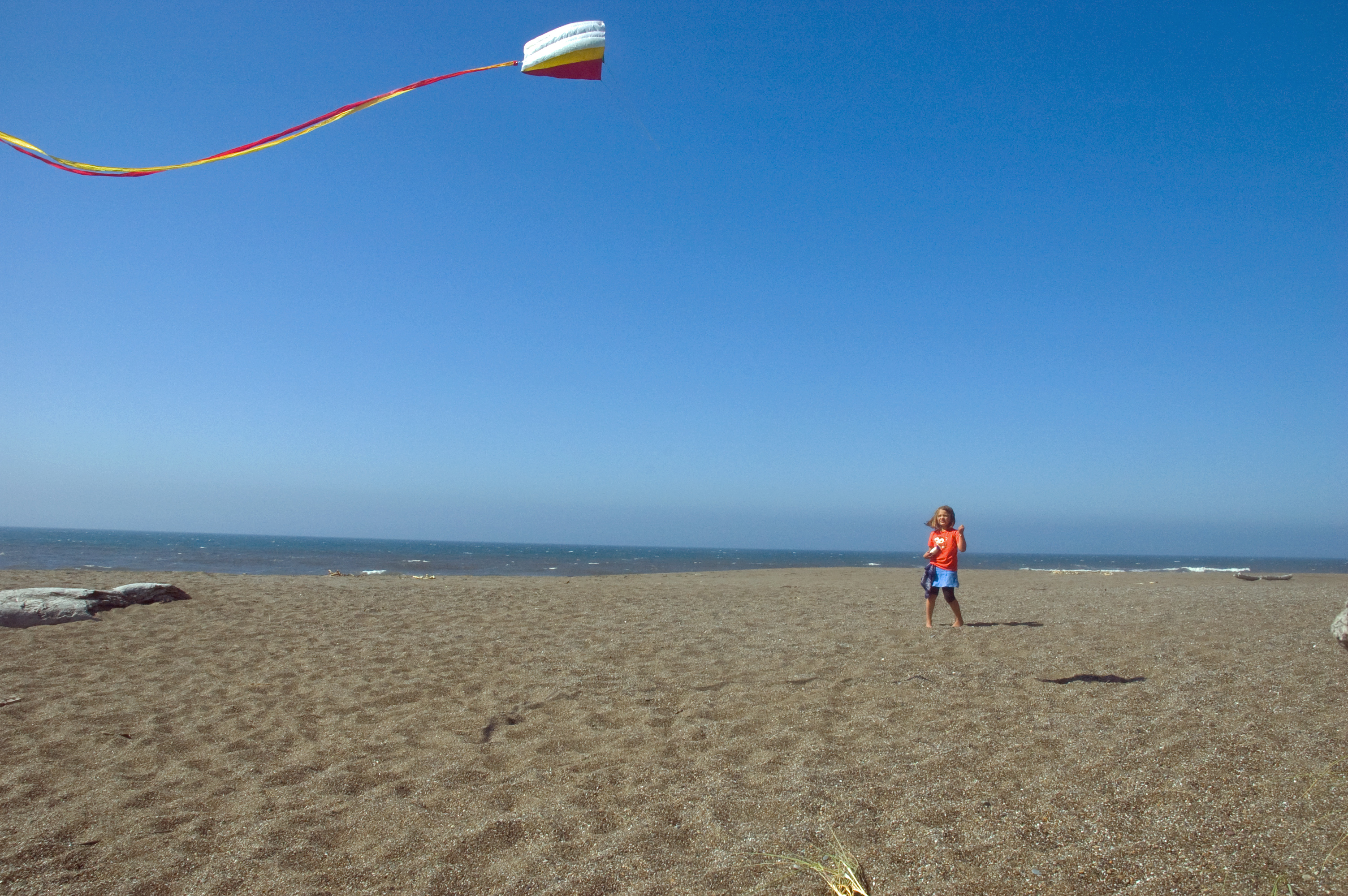
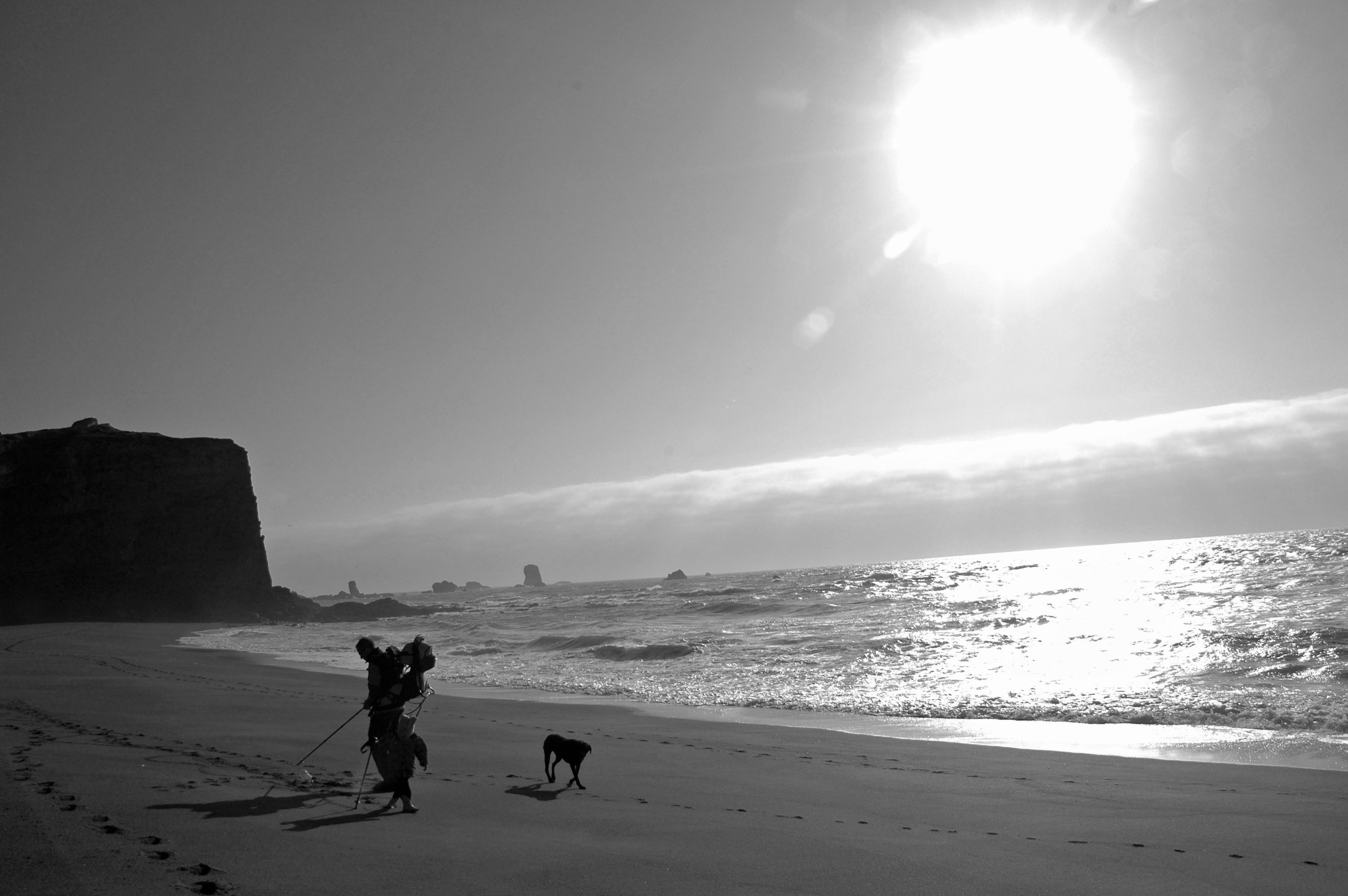
This so far informally proposed travesty came to my attention, coincidentally, on the very night that I returned home after an annual three-day backpack to this stretch of Oregon Coast with my family in late August. We’d just spent days in the sunshine, strolling the familiar sands — we’ve been coming back here for close to a decade — taking in the fresh ocean air, flying kites, slowing down, simplifying, refreshing. Late that night back at home, a headline in the Oregonian caught my eye. Its story dropped my jaw.
The short version: Curry County commissioners want to swap 68 acres of county land for 627 acres of Floras Lake State Natural Area, which has been part of the Oregon parks system since 1943. Through the swap, the county would create a new, 1260-acre county park. The land would be leased to a developer, who would then ransack it with two golf courses. One rendering shows a manicured green and two bunkers squarely on top of a dramatic sandstone plateau overlooking the Pacific. It is a landmark we know well.
The proposal also imagines an interpretive center — for what is a natural and scenic area without a center to interpret it? — and “improved” trails. Based on the county’s concept plan, that appears to mean paved.

All of this, the county supposes, would “create accessibility to public lands” and showcase “ecologically sound land management” and “preservation of native species.” It would also, in bold red letters, lead to “job creation” and “direct revenue for the general fund.”
To me, the entire idea is absolutely galling. Nonsense.
Thankfully, I am not alone. Public opposition seems to far outweigh support. Conservation groups such as the Kalmiopsis Audubon Society, the Oregon Shores Conservation Coalition, and the Portland-based Crag Law Center, all have lined up in opposition. And not only do people question the financial projections and oppose the destruction of this one-of-a-kind treasure, but there is a fishy odor in the air — and it’s not coming from the Pacific.
For months, the commission kept its proposal — and its work with potential developers — behind closed doors. In late June, the Oregon State Parks Department discovered 16 pits within the Floras Lake State Natural Area that had been illegally excavated with heavy equipment. The pits were discovered over an 8-mile section of trail between the southern edge of Floras Lake and Blacklock Point, which just so happens to be the area under consideration for development. No one seems to know who did it; as of today, Oregon State Police are still investigating.

This misguided proposal seems like a long shot for another reason, as well. According to the Oregon Parks and Recreation Department, projects that transfer state park property out of the park system are rare and must meet a high standard — providing “overwhelming benefits to the state park system.” This proposal does not meet that standard at all.
Still, the very fact that this idea is out there and that it’s being given official attention is, at the very least, troubling. It’s also an idea that you hear over and over again. Repackaged, maybe, but the gist is always the same: Develop — i.e. destroy — our most wild, pristine and beautiful places in the name of economic progress and increased access. It’s been tried on Mount Hood. It’s been suggested for Mount Adams. It’s come again now to the Oregon Coast.
Well, not this time. Not this wild, beautiful and scenic place. This one is too close to me. It’s too important. It is too much to lose.
Every time I come here, I am awed. We’ve been bringing our kids here practically every year since they were born. We will keep bringing them here, and one day — imagine — they may bring their kids here, too.
And it won’t be to play golf.

The Curry County Commission is holding an informational meeting at 5 p.m. today, Sept. 14, in Docia Sweet Hall of the Curry County Fairgrounds in Gold Beach. Members of the Oregon State Parks and Recreation Commission will be in attendance to hear details of the county park proposal.
Opposition comments can be submitted at any time to Chris Havel at the Oregon State Parks and Recreation Department (chris.havel@state.or.us) and to Curry County Commissioners George Rhodes (rhodesg@co.curry.or.us), Bill Waddle (waddleb@co.curry.or.us) and David Itzen (itzend@co.curry.or.us).
More information is available at the ODPR Floras Lake and Blacklock Point page and at www.savefloraslake.com
Camping lesson
The Mount Hood National Forest was host to one hell of a party a few weeks ago.
We’d pitched our tent in a favorite area out near the rushing Sandy River, a place we’ve spent many a night over the past few years. The specific spot that we usually favor was already taken when we rolled up, but no worries. There were a few other options nearby, and the one we landed in boasted a nice view of the mountain through the trees and more shade than the old faithful spot.
This place has been great to us ever since we stumbled on it a few years ago. Because it’s not a campground, but instead a handful of dispersed sites, it’s relatively free of the crowds that flock to the more developed areas. And though you don’t have to hike in to get to it, it’s got a measure of serenity and beauty that almost hints at wilderness. Plus, the river’s just a short jaunt away.

Once we had our camp on in the late afternoon hours, the cars started rolling by. First one. Then another. And another. A Jeep with four young guys in it. A pickup truck rumbling with bass. A little sedan that had no business on such a rough road weighted down with folks.
The party, in the site a couple down from us, kicked off as the first cars pulled up. A car door would slam, some loud greetings would exchange, and then the beverages would crack open. I know how it works. I’ve been to my fair share of those, especially back in the pre-21 days. This was one of those.
It raged throughout the night, as the sun set, the mountain faded, the stars shone. Loud laughter, obnoxious machismo, breaking glass. Because we were a few sites away — and because we remembered what we had been like at that age — it wasn’t so bad. Just different than our normal escapes up there. Louder, mainly. And surprisingly, we just about outlasted the rowdies. By the time we retired from our own quiet campfire, it was pretty close to silent throughout the woods.
The next morning, the same cars we’d watched roll in the night before rolled back out in the early morning sun. My five-year-old daughter and I took a walk down the dusty road to survey the damage. And that’s when I changed from a slightly annoyed but somewhat understanding neighbor into an incredibly disappointed and perturbed curmudgeon. There was trash along the road, broken glass in the bushes. A pair of pants with who knows what on them sat crumpled up under a tree. Toilet paper streamed from the manzanita, camping chairs lay broken and bent on the ground, and the last car to leave loaded up the fire pit with trash, set it ablaze and drove away.
It was not pretty.
It needed to be cleaned up. I didn’t want to do it, but I knew we’d probably be back up for another weekend sometime this summer. I also knew that the Forest Service had been tolerating these unregulated sites, but that they were beginning to rethink that approach. Posted on all the sites in the area, for the first time since we’d camped there three or four years ago, were some unfortunate signs.

After mulling it over at breakfast and not being able to leave it alone, my daughter and I grabbed some plastic bags, headed back over to the trashed site, and cleaned it up. Five garbage bags, two wrecked camping chairs and a couple bucks worth of returnables later, it looked hospitable again. Probably still needed a good rain before I’d pitch my tent there again, but it was on its way.
I’d like to think that when I was that age, I would have been a little more conscientious about the things I did and didn’t do, but to be honest, I’m not sure I would have. Back then, a lot of it was about having new fun and, sometimes, not holding onto any evidence. I understand that. But years later, my perspective has swung over to the other, more adult and responsible side; the side that cannot fathom how anyone could leave a campsite just a few hundred yards away from the Sandy River and with a lovely view of Mount Hood in such littered disarray.
Who knows how many more scenes like that the Forest Service will have to walk up on before they do actually close those beautiful sites to everyone. I consider myself lucky to have found a place like this, to be able to enjoy an escape like this.
It’s easy to take these places for granted. It’s best not to.
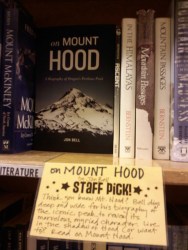
 On MOUNT HOOD