The Book. The Mountain. Everything in between.

Latest

Mount Hood, Timberline, and The Shining — again . . .

It only took a couple of exterior shots of Timberline Lodge to forever link Mount Hood to Stephen King’s classic novel, The Shining, or, more appropriately, Stanley Kubric’s interpretation of the book. Most of the movie was shot in a sound stage in England, but there are a few opening scenes that are unmistakably Mount Hood.

I’ve been a Stephen King fan since middle school and a long admirer of The Shining. Even more so since writing On Mount Hood. 

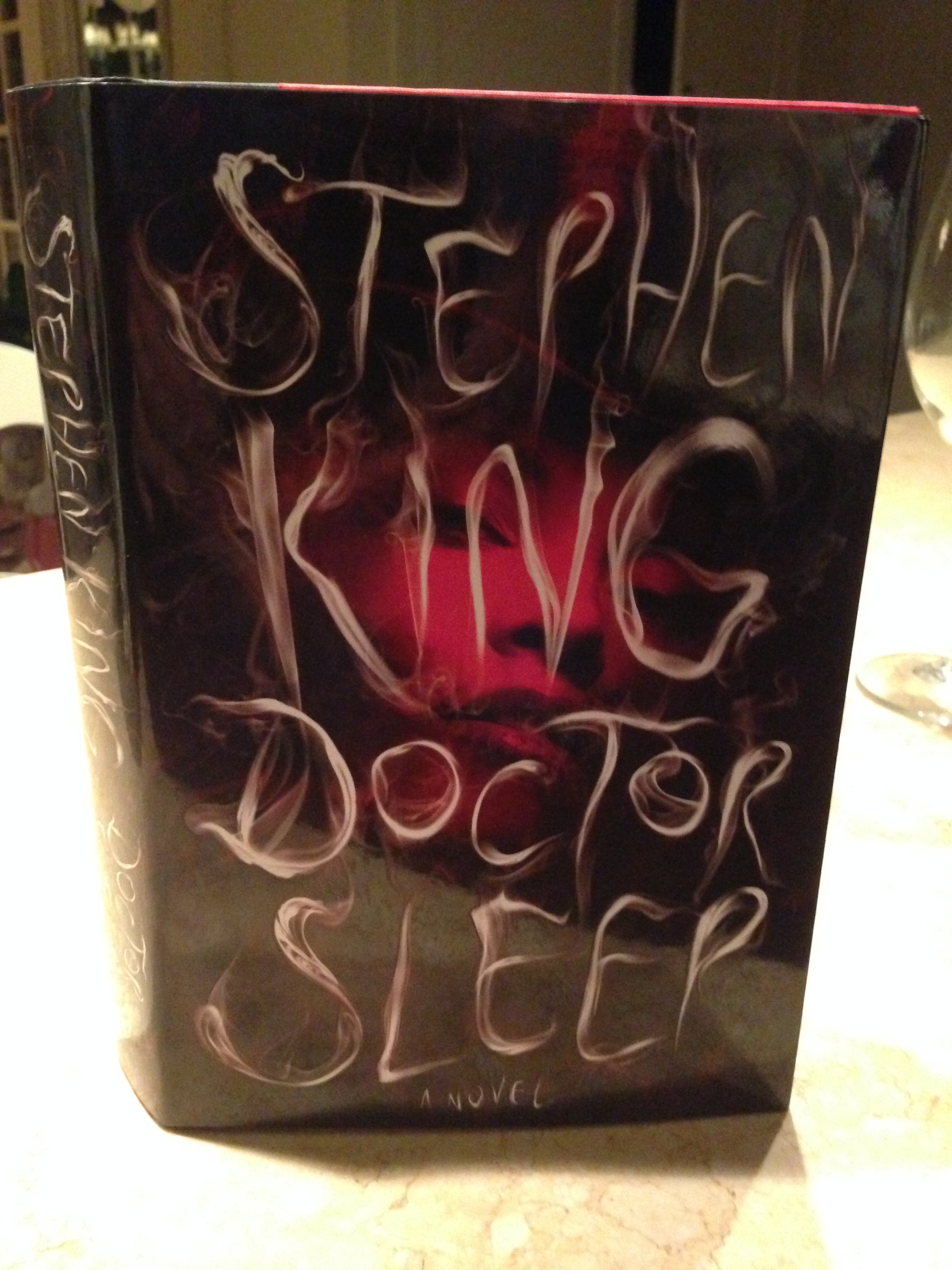
So it was with great excitement that I heard about King writing a sequel to The Shining, which just came out a week or so ago. It’s called Doctor Sleep and centers around the now grown up Danny Torrance, the clairvoyant little boy from the original story.

I bought a copy at Powell’s over the weekend and am anxious to get into it. I read the original every couple years, and every year around this time I watch the movie, so it’ll be nice to add a new chapter to the Shining story. . .

photo

Image

Timberline Trail 2013 — another sneak peek

Time flies by, especially at the end of the summer, with out-of-town guests, back-to-school prep, and cramming in as much fun as possible while the days are still warm and bright.

It’s great, of course, but it also makes it a little tough to get some things done, like writing about our epic trip on the Timberline Trail nearly a month ago. I will get to it — and all my pictures — soon, but in the meantime, here’s another sneak preview from that trip. This is one of those views of the mountain you only get if you work for it . . . 

Stevan Allred – and Silver Man – at Powell’s Books

A great book event at Powell’s for Stevan Allred’s A Simplified Map of the Real World. And a special guest to accompany the reading of “The Painted Man.”

20130912-213020.jpg

Stevan Allred at Powell’s Books

Thanks to being included in Laura Stanfill’s Brave on the Page book last year, I made a bunch of great new connections in the Portland writing scene. Among them:  Laura herself, who started Forest Avenue Press; Joanna Rose, a local writer and teacher who was on our Timberline Trail adventure last month; Scott Sparling, author of Wire to Wire, a great novel set in a corner of northern Michigan that’s near and dear to my heart: and Stevan Allred, a local writer and storyteller who included me as part of his annual Writers Night at the Springwater Grange earlier this year.

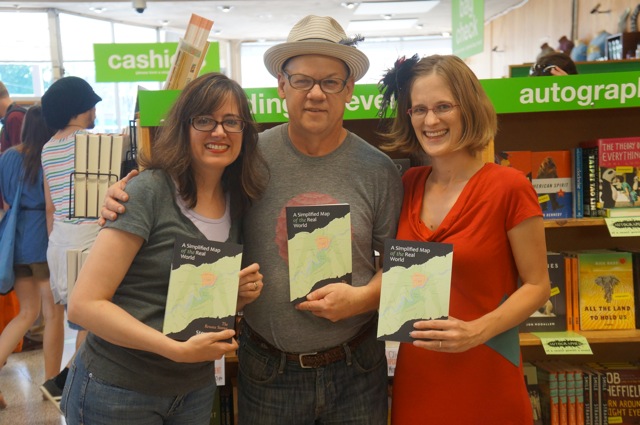
Now, Stevan’s book, a fantastic collection of related stories called A Simplified Map of the Real World, is being published (as Forest Avenue’s second title!), and they’re releasing the book in the biggest way possible in Portland — with a kickoff event at Powell’s City of Books on Burnside. The event starts at 7:30 p.m. tomorrow, Sept. 12, and promises to be a great one.

allred at powell's

DSC07920_2Gigi Little, graphic designer for Forest Avenue Press, Stevan Allred, and Forest Avenue publisher Laura Stanfill at Powell’s City of Books.

Mount Hood from the Clackamas River

A beautiful late-summer day floating along the Clackamas River. We’ve done it a few times before, but this was the first time we’ve seen Mount Hood from the river. (It’s way back in the back…) Pretty incredible way to spend a day.

20130908-204752.jpg

A little more on McNeil Point

Before we camped in the McNeil Campground along the banks of the Sandy River with some friends from Atlanta last weekend, before I hiked the Timberline Trail with four other adventurers a week earlier, and before Oliver and I returned to McNeil Point up the Mazama Trail back in July, I felt like I knew a decent amount about Fred McNeil.

A journalist for The Oregon Journal for nearly 45 years, from 1912 to 1957, McNeil was a huge fan of Mount Hood. According to the preface of McNeil’s Mount Hood: Wy’East the Mountain Revisited, a 1990 re-issue of McNeil’s classic Mount Hood book, the Cascade Mountains captivated him from the day he arrived in Portland from Illinois in 1912. He “pursued and reported events on the peaks with a passion” and “became personally involved in their protection as well as their development, especially for skiing.” If something happened on Mount Hood — someone got lost, a plane crashed, a fire broke out — McNeil would instantly turn his news focus to the mountain, no matter what else was going on.
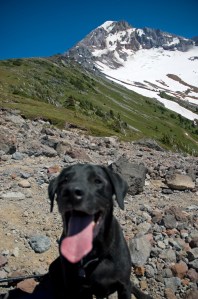
Oliver at McNeil Point.

Oliver at McNeil Point.

He also enjoyed the mountain, hiking all over it and climbing to its summit long before the road was blazed to what would become the site of Timberline Lodge. He was a member of The Mazamas, the Cascade Ski Club, the Wy’East Climbers and other mountain organizations.

According to the preface of McNeil’s Mount Hood, written by journalist Tom McAllister, McNeil made sure that a story about the long closure of Lolo Pass Road landed on the front page of The Oregon Journal. The closure had been designed to keep people out of the original bounds of the Bull Run Watershed. Even after those boundaries changed, however, the closure remained,  blocking access to some of the mountain’s most incredible west-side geography. After several stories and photos and a supporting editorial, the gates to Lolo Pass were opened.

Which is a great legacy, because otherwise it would be much harder to get to places like McNeil Point and the quiet McNeil Campground, both, of course, named for Fred McNeil.

Most of this I kind of remembered from my own research. But I’d forgotten something else about McNeil.

As we rolled out of the campground last week, headed toward Timberline Lodge and then Lost Lake, I stopped to read a plaque near the campground’s entrance. It sums up nicely McNeil’s life and his love of the mountains. It also notes that McNeil “rests four miles eastward and upward at McNeil Point.”

His friends hiked up to the point and spread his ashes there in July of 1959.

McNeil Plaque