They grow up so fast
It’s so cliche, but it’s so true. One day, they join you in the world not able to do much more but depend on you; the next, you’re packing them off on a school bus for their first day of kindergarten.
I’ve watched my daughter grow up so fast over the past nearly six years. Because I’m a freelance writer and get to work from home, I’ve been lucky to spend so much time with her that I would miss out on if I had a regular 9 to 5 gig.
How much she has grown up over the past few years really hit home with me a few weeks ago, though, when we headed up to Mount Hood to hit the Tamanawas Falls trail. Madeline had been on some hikes before, but something about this one, when she had her own trekking poles, her first real backpack, and a real desire to lead the way, seemed like a milestone. When she loaded up and had herself ready to go, she just seemed so grown up.

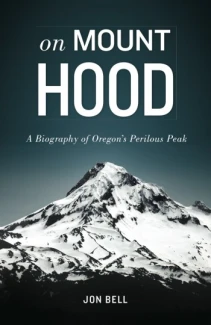
At the same time, it reminded me of the very first time we brought her hiking with us up on Mount Hood, a trip I detail in On Mount Hood. She was a touch younger then — just a year and a half — but even way back then, it seemed like she was already growing up so fast.

Mountain brew — and view
After our hike to Tamawanas Falls over the weekend, we’d worked up a bit of a hunger and a thirst. Our first stop was to Marchesi Vineyards, a charming little winery in Hood River, where we sampled a tasty pinot grigio and their 2010 primitivo, which is pretty much a zinfandel. Both were fantastic, as was the complimentary bread, cheese, and salami and the kid-friendly feel of the place.
For me, though, the ideal aprés-hike beverage is always, hands-down, a fresh, cold IPA or pale ale. And when you’re hiking the north and east sides of Mount Hood and passing through Hood River on your way back home, you’re in the land of some great examples of both.
For years, the go-to was always Full Sail, and it’s still a consistent king in my book. Their menu has gotten much better over the years as well. Just down the street, Double Mountain Brewery & Taproom threw some variety into the mix when they opened in 2007 with their Vaporizer, IRA and Hop Lava ales. They offer some nice brick-oven pizzas and sandwiches, too.
This time, we branched out a little more, and headed over the river to Everybody’s Brewing, a characteristic brew pub I’d heard about in White Salmon. Like some of the other brewers out in the Gorge, Everybody’s Brewing brews ’em up right: Country Boy IPA, Boo Brah Bitter, Goodwill IPA, and others. They also serve up classic pub fare and have a front corner for live music, which was strumming away and adding nice color the night we were there.
There’s something else that sets Everybody’s Brewing apart from many of its compatriots out in the Gorge, too; something that makes the short drive across the bridge to White Salmon even more worth it than it already is:

That’s the view from their patio.
(Image courtesy of Everybody’s Brewing.)
Tamanawas Falls Hike
The first time we did the beautiful Tamanawas Falls hike on the northeast side of Mount Hood, about seven years ago, our loads were a little lighter than they were this past weekend. Back then, it was just the two of us and a black lab puppy.
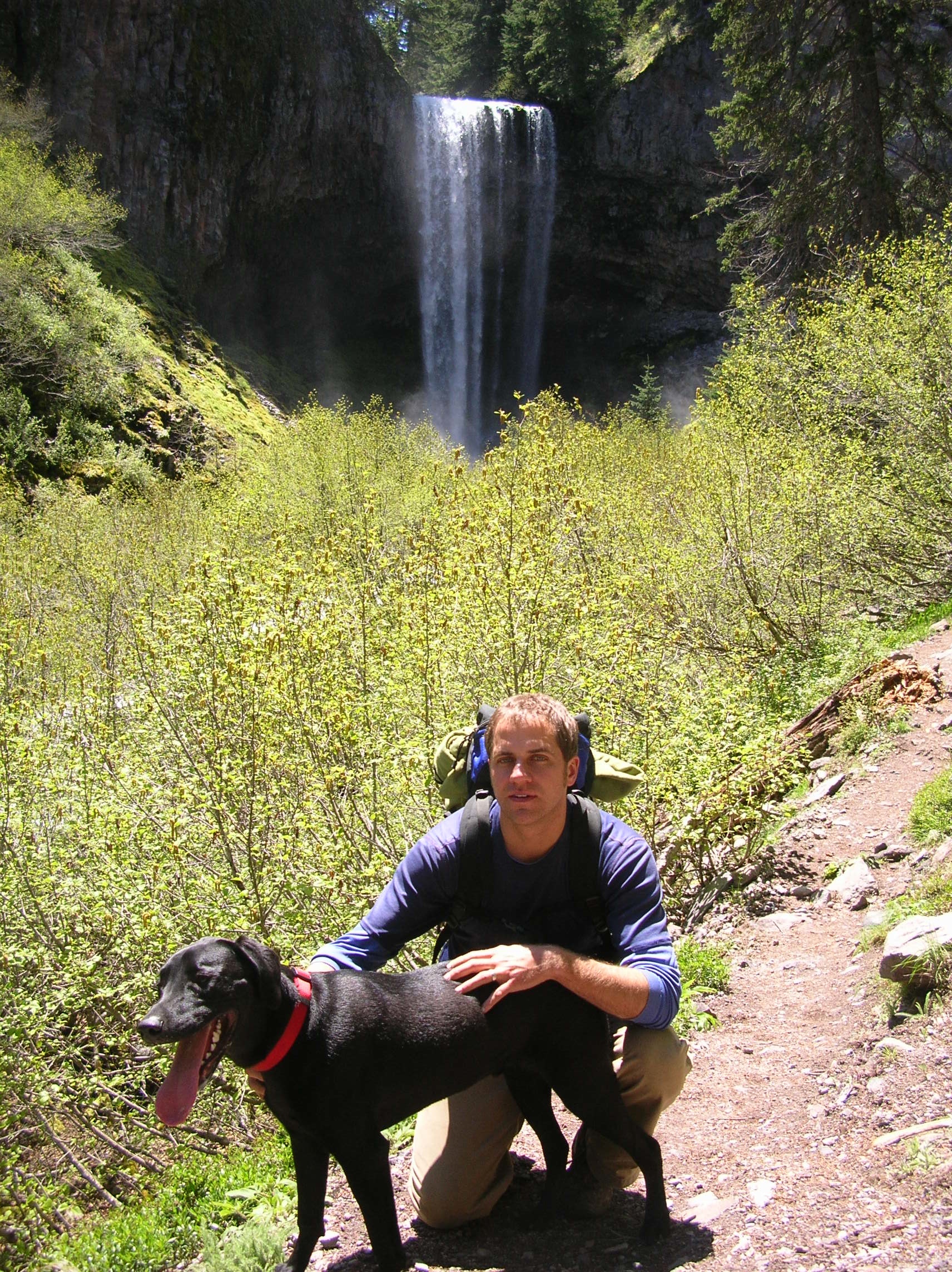
Tamanawas Falls, 2005
I remember the hike being pleasant enough, the falls pretty and natural. For some reason, though, what really stuck in my mind from that first time was a guy who had hiked the two miles back to the falls and was taking a break on the side of the trail. On his back was a pack full of his, I don’t know, maybe one-and-a-half-year-old daughter. At the time, I was pretty impressed and glad to see that he was still hitting the trail even though he had a little one in tow. It wasn’t an easy concept for me to grasp back then, pre-kids and all.
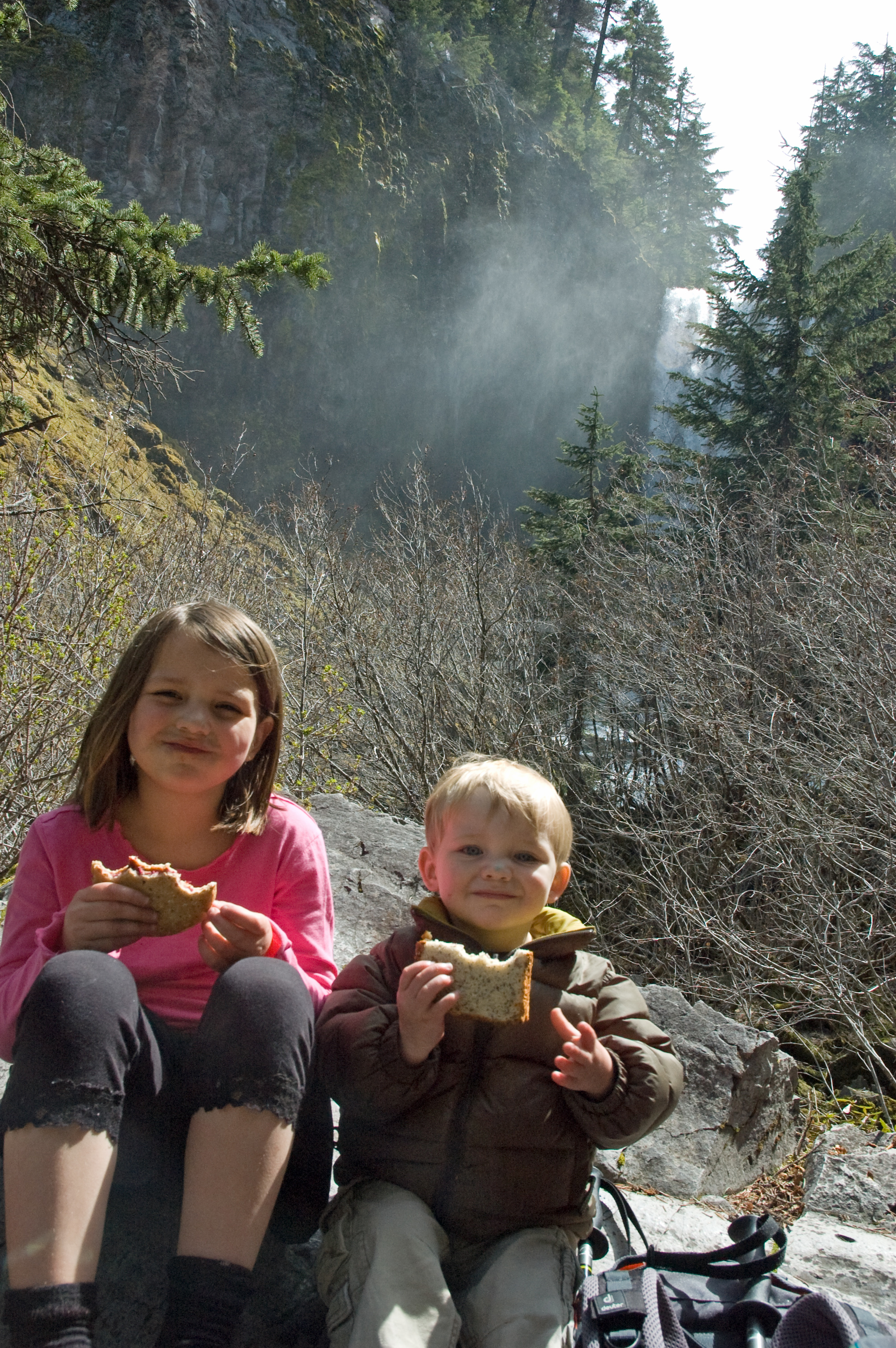
Not too long after that, however, I became that guy myself, heaving my daughter and then my son on my back to hit the trail at places like the Salmon River, Wind Mountain, and an all-time favorite, the beach near Bandon. Fast-forward a few more years, and the cycle’s progressed even a little further. The dog’s still bounding like he was in 2005, the boy’s still on my back at 2, but his big sister is now making her way down the trail and to the falls on her own.
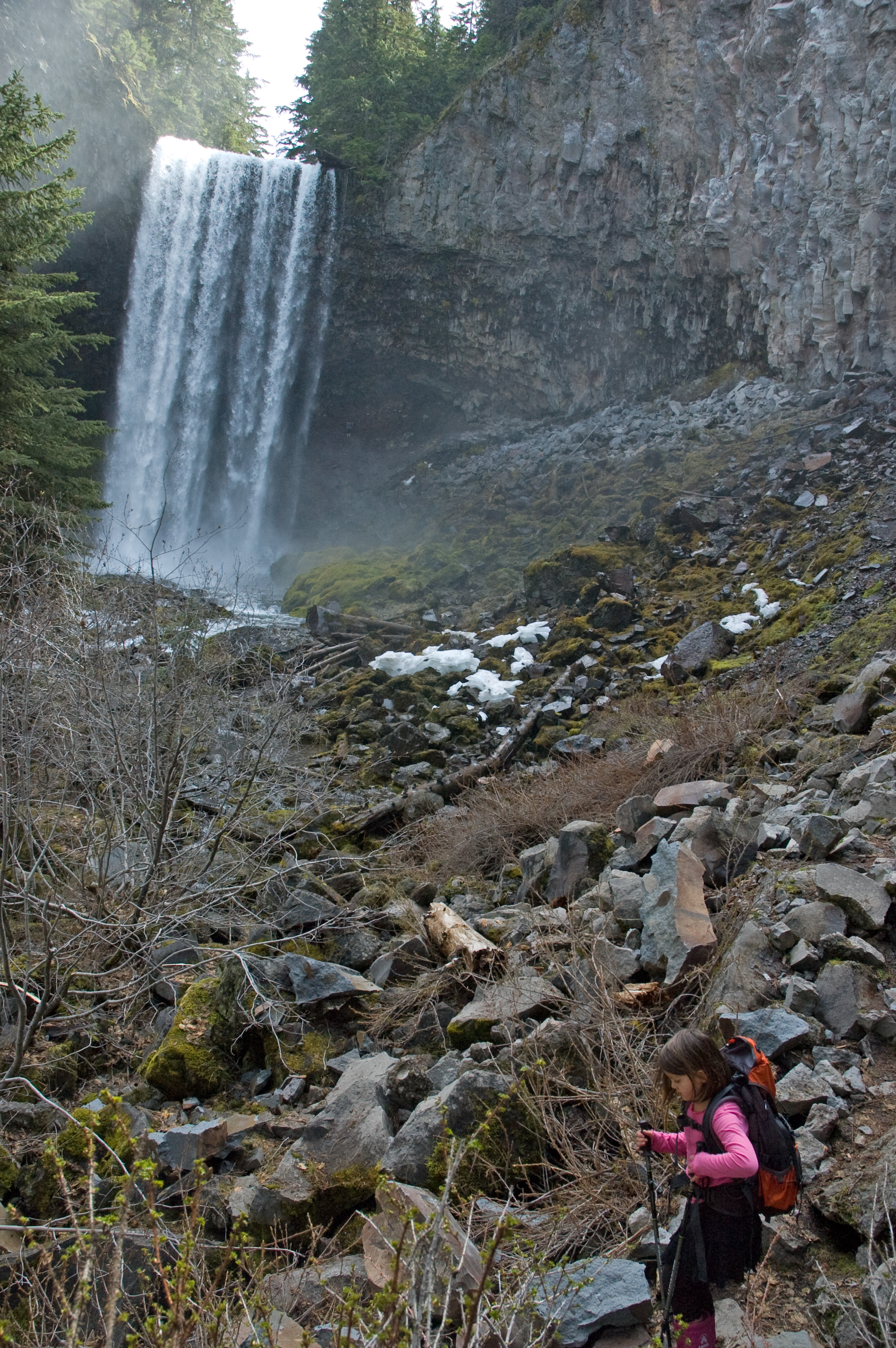
The hike to Tamanawas Falls is a great one. Just under two miles one way and with less than 600 feet in elevation gain, the trail pretty much just ambles along the crystalline Cold Spring Creek through a quiet and, at times, dense fir forest. A couple stout log bridges make for easy stream crossings, and the cascading creek, towering trees, and easy, scenic terrain keep the mind on what’s important out in the wild. It’s an ideal Mount Hood hike for anyone looking to get out for a quick stretch of the legs and the senses. As I’ve come to learn over the years, it’s an even more ideal hike for those who are just learning how to stretch out their little legs and enjoy a walk in the woods.
Winter walking
When it comes to hiking, I’m ideally a fan of the alpine environment. I like to start out in the trees and hike up out of them, above timberline, to where the mountain views are widest. High up places like the Goat Rocks in Washington, Oregon’s Wallowa Mountains, and on Mount Hood spots like Cooper Spur, McNeil Point and Gnarl Ridge, define my kind of a walk in the woods.

Gnarl Ridge, Mount Hood
In the winter, however, a lot of the alpine country is much harder to access. And so, for hiking, we’re pushed downward to the river trails, maybe out to the Gorge or just east of the Cascades. This past weekend, we logged a few easy miles among the towering cedars and firs along the Salmon River trail in the Mount Hood National Forest, and while its views are much more subtle and understated than, say, the top of Old Snowy Mountain —

— it’s still among the best winter hiking to be found around Mount Hood. A few to consider:
- Salmon River Trail — An easy stroll along a beautiful and wild river — one of the only ones in the nation to be designated a Wild and Scenic River for its entire length — the Salmon River trail makes for a nice winter walk no matter the weather. It’s relatively flat, so it’s great for kids, and the moss-draped old growth Douglas firs and western red cedars that rise from the forest floor absolutely tower overhead, making you feel as if you’re walking through some kind of prehistoric era. The trail can be up to 7 miles long and there are lots of good places to stop for a break and turn around. To get there, take Highway 26 east from Portland to the town of Zigzag. Turn south on Salmon River Road and drive five miles to the trailhead on the left, just before a bridge over the river. More info.
- Hood River Mountain — This one’s a little ways away from the mountain, just outside Hood River, but its view of the peak and the entire Hood River Valley is simply jaw-dropping. Just three miles roundtrip and 600 feet up, Hood River mountain affords you a view that usually takes a lot more effort to attain. From Hood River, drive south on Highway 35 for just under a half-mile to East Side Road and turn left. According to Doug Lorain’s book, Afoot and Afield, “follow it 1.5 miles to the turnoff for Panorama Point County Park. Keep straight on East Side Road, and .4 mile after the park turnoff, turn left on Old Dalles Road. Drive east . . . for 2.1 miles to a saddle beneath a set of power lines. Park on the side of the road.” More information.
- Lower Creek Falls (Wash.) — Even farther from Mount Hood but still within reach for a day hike from Portland, Lower Creek Falls follows a serene Falls Creek, heads over a stunning suspension bridge, and tops out at the three-tiered Lower Creek Falls. Another great hike for kids and hounds. From Portland, head east on Highway 14 (in Washington) to milepost 47 and turn north toward Carson. Drive 14.5 miles on Wind River Road, pass the Carson National Fish Hatchery, and stay right on Wind River road for another 3/4 mile. Turn right on FS 3062 and drive 1.5 miles to the trail head. More information.
Too much to lose: Floras Lake and Blacklock Point
There is a place on the southern Oregon Coast where a cool Pacific breeze blows almost constantly off the steel-blue waters of the ocean, fanning out over fine brown-gray sand, bending and swaying long green blades of dune grass, brushing and bowling through stubby shore pines and tall inland Sitka spruce, reflecting off tawny sandstone cliffs that rise and tower over the wild shore. It is a place where purple and orange starfish and green anemones linger in salty tide pools, where seals spy and brown pelicans soar; a place where gray whales spout off in the distance and blue herons sail overhead.
Gazing from some lookouts, a near glimpse of the earth’s graceful curve; from others, waterfalls and crashing, foaming surf. There are occasional, subtle, tolerable signs of man: forest trails, colorful, far-off kite surfers, a small fishing boat, the clockwork pulse of the Cape Blanco Lighthouse under black skies spilling with stars.
Otherwise, this place, a sliver of shoreline south of Bandon near the tiny town of Langlois, is about as wild and as beautiful and as natural a place as is to be found along the entire Oregon Coast.

And yet, if commissioners from Curry County have their way, this place — it’s not hyperbole to summon the sacred here — would be cleaved and cleared, paved and pounded, planted with rough and greens, pocked with bunkers, soaked in poisons, manicured, homogenized and standardized, all in the name of a little white ball and a big green dollar bill.
Yes, the commissioners from Curry County, fearing for the solvency, maybe even the very existence, of the entire county, want to develop some of the most pristine and breathtaking land on the entire West Coast into . . . golf courses.
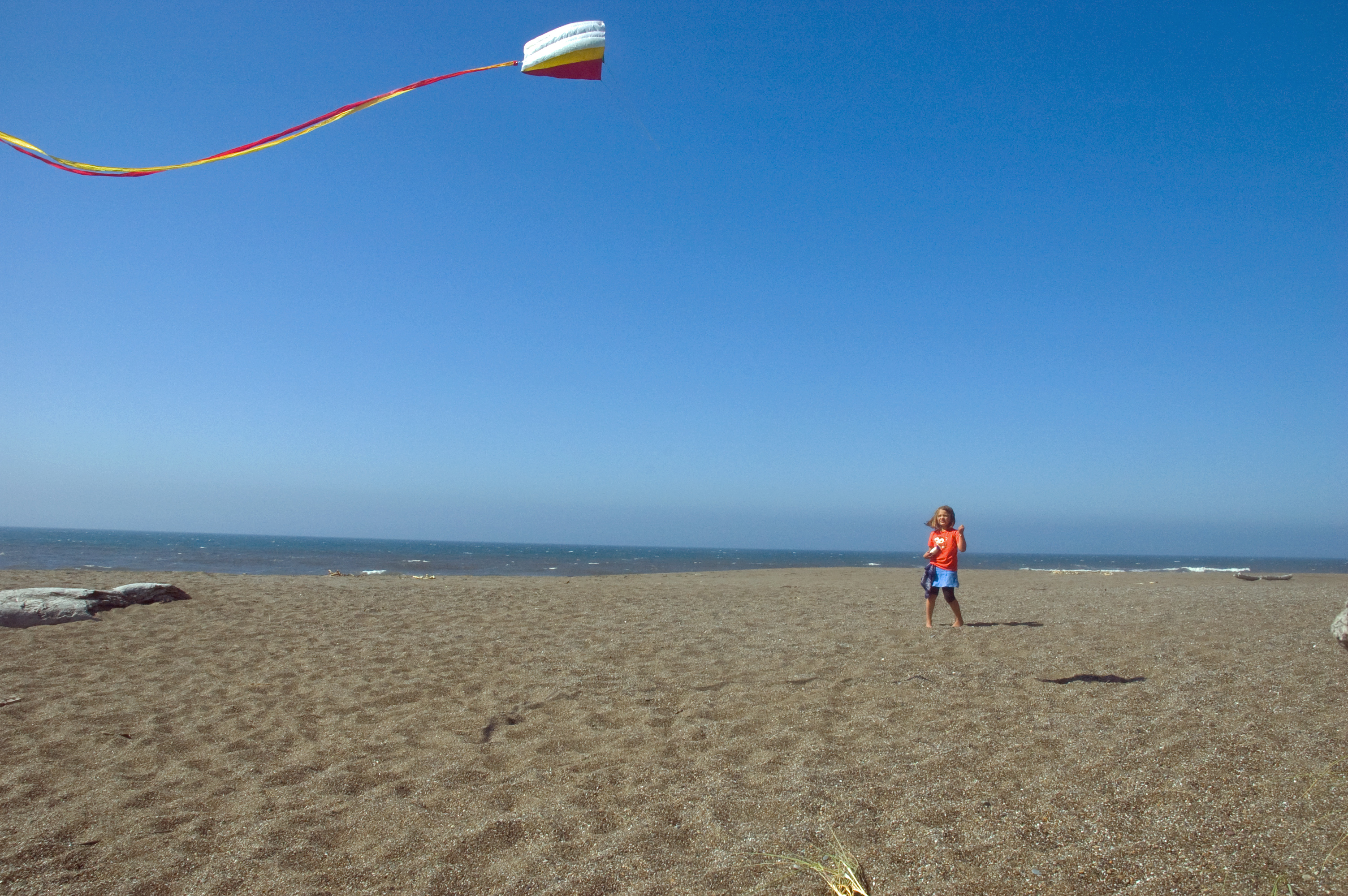
This so far informally proposed travesty came to my attention, coincidentally, on the very night that I returned home after an annual three-day backpack to this stretch of Oregon Coast with my family in late August. We’d just spent days in the sunshine, strolling the familiar sands — we’ve been coming back here for close to a decade — taking in the fresh ocean air, flying kites, slowing down, simplifying, refreshing. Late that night back at home, a headline in the Oregonian caught my eye. Its story dropped my jaw.
The short version: Curry County commissioners want to swap 68 acres of county land for 627 acres of Floras Lake State Natural Area, which has been part of the Oregon parks system since 1943. Through the swap, the county would create a new, 1260-acre county park. The land would be leased to a developer, who would then ransack it with two golf courses. One rendering shows a manicured green and two bunkers squarely on top of a dramatic sandstone plateau overlooking the Pacific. It is a landmark we know well.
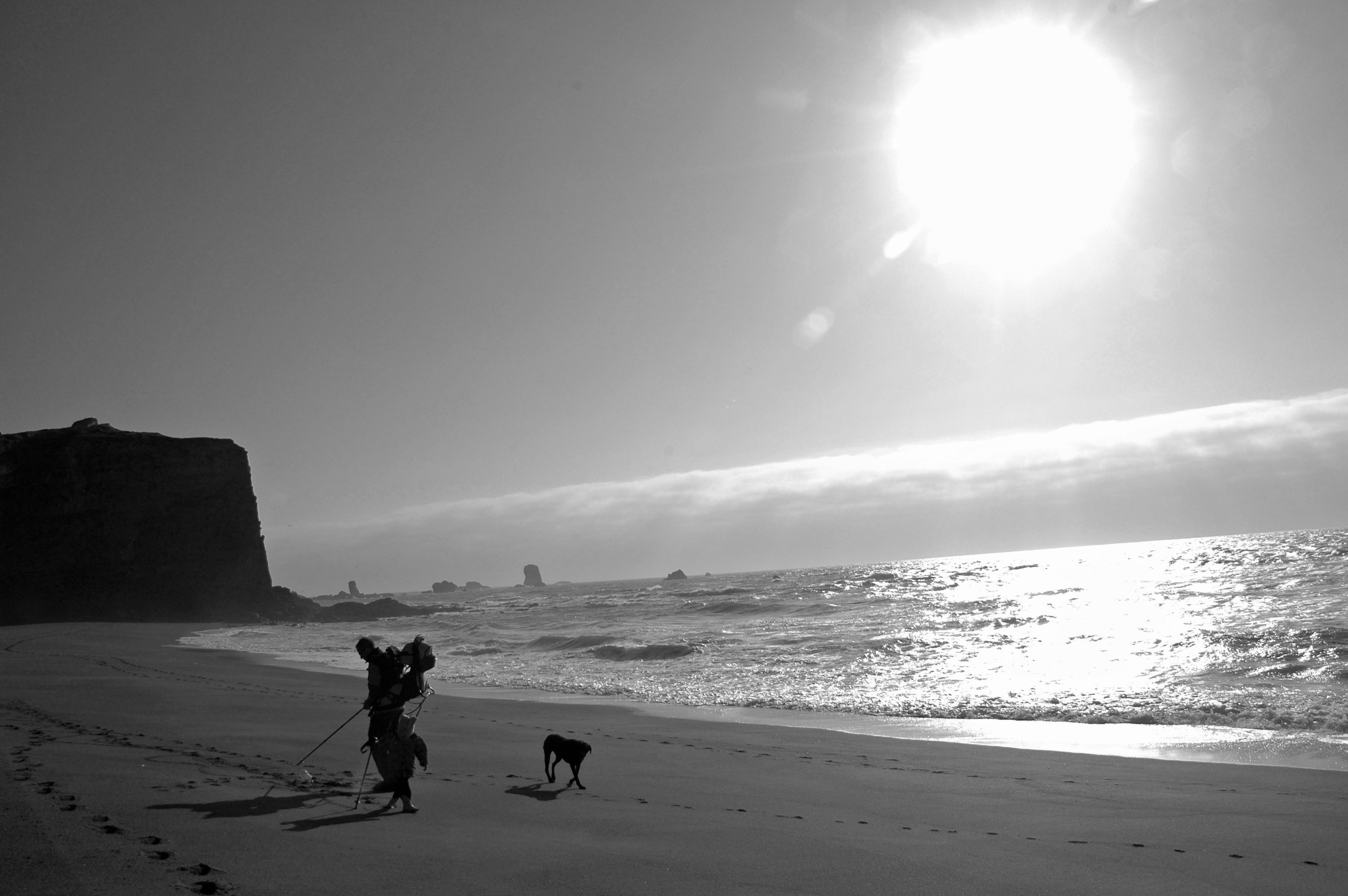
The proposal also imagines an interpretive center — for what is a natural and scenic area without a center to interpret it? — and “improved” trails. Based on the county’s concept plan, that appears to mean paved.

All of this, the county supposes, would “create accessibility to public lands” and showcase “ecologically sound land management” and “preservation of native species.” It would also, in bold red letters, lead to “job creation” and “direct revenue for the general fund.”
To me, the entire idea is absolutely galling. Nonsense.
Thankfully, I am not alone. Public opposition seems to far outweigh support. Conservation groups such as the Kalmiopsis Audubon Society, the Oregon Shores Conservation Coalition, and the Portland-based Crag Law Center, all have lined up in opposition. And not only do people question the financial projections and oppose the destruction of this one-of-a-kind treasure, but there is a fishy odor in the air — and it’s not coming from the Pacific.
For months, the commission kept its proposal — and its work with potential developers — behind closed doors. In late June, the Oregon State Parks Department discovered 16 pits within the Floras Lake State Natural Area that had been illegally excavated with heavy equipment. The pits were discovered over an 8-mile section of trail between the southern edge of Floras Lake and Blacklock Point, which just so happens to be the area under consideration for development. No one seems to know who did it; as of today, Oregon State Police are still investigating.

This misguided proposal seems like a long shot for another reason, as well. According to the Oregon Parks and Recreation Department, projects that transfer state park property out of the park system are rare and must meet a high standard — providing “overwhelming benefits to the state park system.” This proposal does not meet that standard at all.
Still, the very fact that this idea is out there and that it’s being given official attention is, at the very least, troubling. It’s also an idea that you hear over and over again. Repackaged, maybe, but the gist is always the same: Develop — i.e. destroy — our most wild, pristine and beautiful places in the name of economic progress and increased access. It’s been tried on Mount Hood. It’s been suggested for Mount Adams. It’s come again now to the Oregon Coast.
Well, not this time. Not this wild, beautiful and scenic place. This one is too close to me. It’s too important. It is too much to lose.
Every time I come here, I am awed. We’ve been bringing our kids here practically every year since they were born. We will keep bringing them here, and one day — imagine — they may bring their kids here, too.
And it won’t be to play golf.

The Curry County Commission is holding an informational meeting at 5 p.m. today, Sept. 14, in Docia Sweet Hall of the Curry County Fairgrounds in Gold Beach. Members of the Oregon State Parks and Recreation Commission will be in attendance to hear details of the county park proposal.
Opposition comments can be submitted at any time to Chris Havel at the Oregon State Parks and Recreation Department (chris.havel@state.or.us) and to Curry County Commissioners George Rhodes (rhodesg@co.curry.or.us), Bill Waddle (waddleb@co.curry.or.us) and David Itzen (itzend@co.curry.or.us).
More information is available at the ODPR Floras Lake and Blacklock Point page and at www.savefloraslake.com
Guidebooks
While there really aren’t that many books out there that tell the story of Mount Hood — Jack Grauer’s essential “Mount Hood: A Complete History” and Fred McNeil’s “Wy’East: The Mountain” notwithstanding — there are quite a few great hiking books that can really show people how to get to know the mountain through exploration.
Among my favorites are three from Oregon author and lifelong hiker Douglas Lorain.
 I first saw one of Doug’s slideshows probably 10 or 12 years ago at a regular meeting of the Ptarmigans, a Vancouver mountaineering club that has since gone on indefinite hiatus. It was all about his newest and maybe first book, “Backpacking Oregon.” Filled with trips all across the state, it also contains the definitive description and itinerary for the Timberline Trail on Mount Hood. Even though that hike, as mentioned yesterday, is supposedly no longer possible as a single loop, it was still in good shape in 2005, when Amy and I did it. “Backpacking Oregon” helped us plan our trip, stay on track, and have a memorable time.
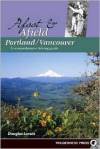 Lorain is also the author of “Afoot & Afield: Portland/Vancouver, A comprehensive hiking guide.” It’s a thick tome of more than 200 hikes within an hour’s drive or so of the Portland metro region. I’ve barely tapped into it myself — there’s nearly 50 trips around Mount Hood alone — but it’s got some great, little-known excursions. Among my favorites: Cape Horn, a light 3-mile walk to the edge of some amazing cliffs on the Washington side of the Columbia River Gorge, and Hood River Mountain, an easy 3-mile loop just outside of Hood River with jaw-dropping views of the Hood River Valley, Mount Hood’s north face, the Columbia River, and St. Helens, Rainier, and Adams.
 When I first got to Portland in 1997 and started backpacking every weekend, Amy and I talked about doing a backpacking guidebook full of the best trips you could fit into a single weekend. It seemed like the perfect guidebook for people who had just the standard two days off every week to get out of town. I missed my opportunity, but Lorain nailed it with “One Night Wilderness Portland: Quick and Convenient Getaways within Three Hours of the City.” Filled with more than 60 trips, including 12 on Mount Hood, this book is just what I’d had in mind — and what true weekend backpackers had been looking for.
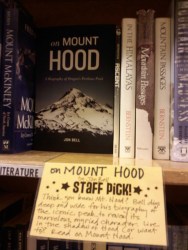
 On MOUNT HOOD