The Book. The Mountain. Everything in between.

Latest

Gnarl Ridge

It had been a long time since I’d been up to  Gnarl Ridge on Mount Hood’s east side. Almost six years, to be exact.

In fact, the last time I was up there, Amy and I were coming around the mountain from Cooper Spur on day four of our trip on the Timberline Trail. It was the first time I’d really been up that high on that side of the mountain and taken in such a unique perspective of it. From up there, Hood is massive, sprawling and broad, not at all like the textbook spire you see from the west or north.
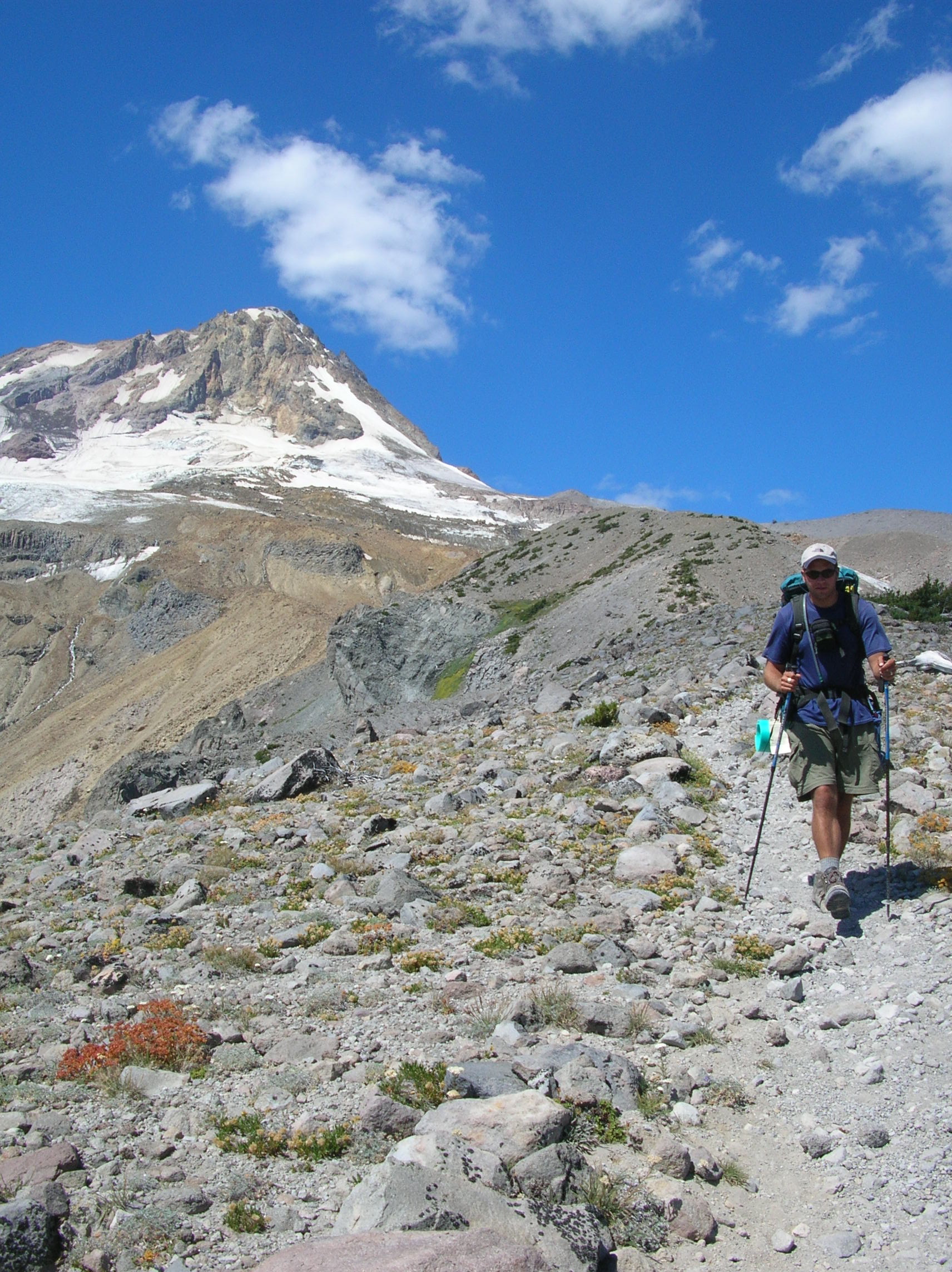
Coming down Gnarl Ridge on the Timberline Trail in 2005.

And if there’s a ridge more aptly-named than Gnarl Ridge  on the entire mountain, I have yet to find it. Its craggy spine is littered with crumbling gray, black, and red volcanic rocks. Its steep southern edge ends in a sheer, unstable plunge hundreds of feet down to the canyon of Newton Creek below, and the stunted trees — whitebark pines — that cling to the ridge just at timberline have been ravaged by the wind and the snow up there. The live ones look perpetually bent and braced for the next gust; the dead ones, bleached and stark, look like boney hands reaching up out of the ground.

Gnarly, indeed.

I ended back up on Gnarl Ridge this past weekend almost by accident, as the original plan had been to walk the mostly leisurely two-and-a-half miles to Elk Meadows and spend the night there. (I’d not been there since our Timberline Trail trip in 2005, either. The spot played a big role in how that hike ended up playing out, which I write about in my book.) But once Oliver, my friend Wyatt, and I got to the sunny meadows, we still had plenty of energy and daylight to press on, so we did.

We walked through the woods up from Elk Meadows and just enjoyed being outside in the finally summer-like weather. Just a week earlier, we’d hiked to the top of Silver Star Mountain through rain, mist, clouds, and a chill that was more mid-March than mid-July. Right about 5,500 feet, we hit some snow, but the trail revealed itself just often enough that we were able to keep on track. (A little GPS assistance kept us true as well.)

There were some decent campsites with partial views of Hood that would have worked fine if there’d been nothing else, but after Wyatt headed back down, Oliver and I trudged up to the top of Lamberson Butte — named for early Mazama Lewis Lamberson — surveyed the incredible views, and found some even better spots to pitch a tent.

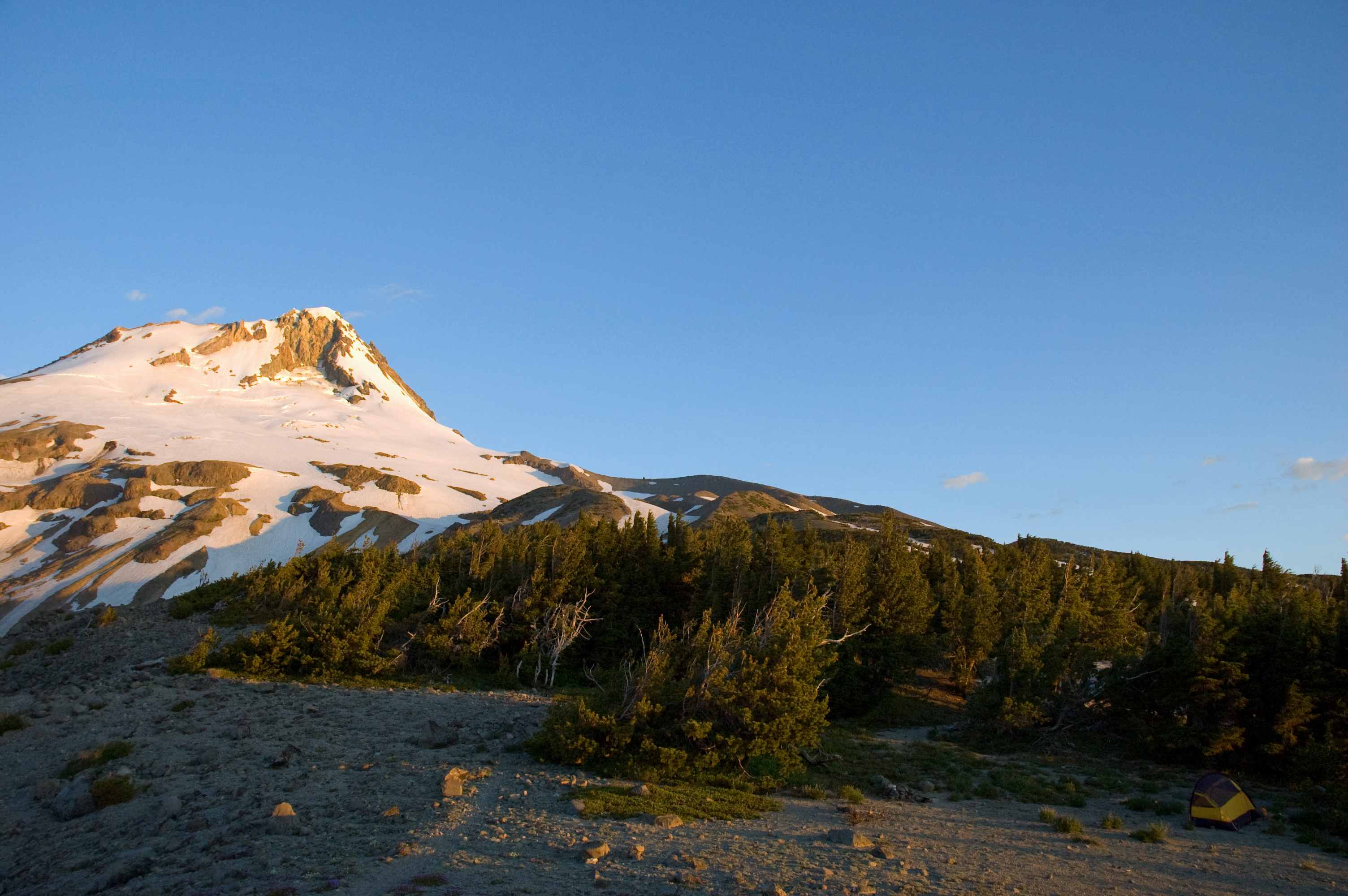
So we spent a quiet night on Gnarl Ridge, watching the sun set on Hood, Jefferson, the Sisters and Bachelor, listening to the creek shush and the valley slowly erode with the rumble of a random boulder every so often.

The nighttime stars were immaculate. Off to the east, a Gorge wind farm pulsed faintly every ten seconds, puncturing the distant darkness with red pinpricks like Christmas tree lights. And in the morning, I somehow woke up just as the sun was rising, coloring the mountain and everything around it in a clear, golden glow.

It was good to be back on Gnarl Ridge.
Steiners

Father’s Day weekend this year was a rainy and gray one. The water came in a nearly unending stream and the wooly clouds parked overhead and didn’t budge.

I’d had a book signing at Wy’East Book Shoppe & Art Gallery in Welches that Friday night — the last sign of sunshine for a few days — but rather than head back home afterwards, we decided to make a weekend out of it.

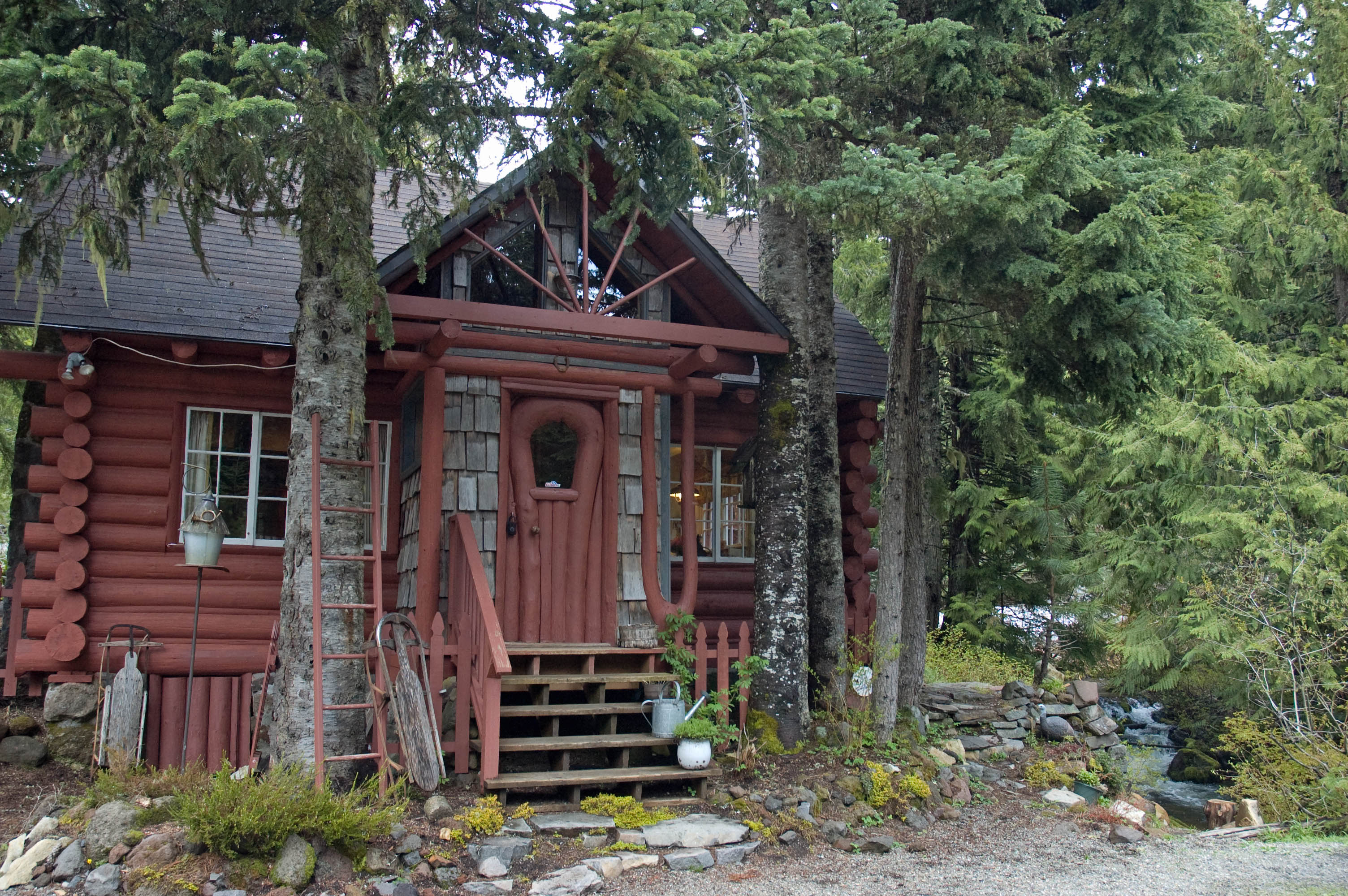
We did so in a Steiner cabin up in Government Camp, thanks to some very generous friends who were lucky enough to come across one of these unique little getaways a few years ago.

Built over two decades by a German craftsman named Henry Steiner beginning in the late 1920s, Steiner cabins stand apart from other alpine hideaways on Mount Hood for their singular accents and ingenious incorporation of natural elements. Steiner and his sons built the cabins by hand — without power tools — and used nearby materials as much as possible: glacial stones, river rocks, Douglas firs and other on-site timbers they hewed themselves. (Henry Steiner also hand-hewed the towering fir columns at Timberline Lodge over just two weeks in the late 1930s.)

One of the most unique features of many of the 30 or so cabins sprinkled between Rhododendron and Government Camp are snow-bent timbers that the Steiners used for rounded doors and other architectural elements.

The Steiners also fashioned natural, functional accents for their cabins, using burls from trees for doorknobs and hand-carving pegs and lever mechanisms to open and close doors and windows. 

The weekend we stayed in a Steiner, raindrops slid off the overhead boughs outside and a crystalline stream gushed without end. An ugly mist kept us from venturing out beyond a few trips to the general store and a quick jaunt up to Timberline Lodge for an afternoon outing. Inside the cabin, the rustic smell of woodsmoke permeated the timbers in a welcoming way. A fire in the stone fireplace added warmth and a glow to the room. We stayed close inside the Steiner for nearly two days straight, and it was just right.

Cover shot

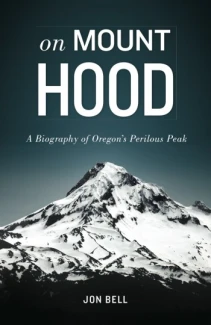
I really like how On Mount Hood turned out in terms of its cover and design. (Hats off to Anna Goldstein for the latter aspect.) It’s clean and arresting, bold and inviting. The shot of Mount Hood is a classic one from Lost Lake on the mountain’s northern side that shows some of Hood’s most notable features: Illumination Rock, Yocum and Cathederal ridges, the Sandy Glacier.

Back when we were brainstorming titles and cover designs, however, I came across another photo that really caught my eye.

I’d been looking for a unique shot of the mountain. One that highlighted its classic symmetrical spire but maybe from a different vantage point than usual. Something that was dramatic but not too foreboding, unique but at the same time familiar.

After countless hours of searching, I found it.

 Photo courtesy of Robert Brownscombe

Entitled “Morning Mist,” this shot of Oregon’s most recognizable mountain is like no others I’ve ever seen. It frames Hood’s classic, pyramidal peak, but it does it in a different way. Yes, this is the mountain’s western profile, which hundreds of thousands of people see from Portland every clear day. But this is that signature view from an entirely different perspective. Closer. Bigger. Bolder.

I tracked down the photographer through Flickr and found that one Robert Brownscombe was behind this incredible image of Mount Hood. Turns out, he’s an amazing amateur photographer who lives up by the mountain — and who has lots of stunning photos on display in his Flickr account. Cordial and responsive to my inquiries, he was amenable to having his photo considered for the cover of my book.

In the end, Sasquatch went with another photo, and the book looks fantastic.

But there will always be something about “Morning Mist” that helps me see Mount Hood in an entirely different way.

We’re off . . .

With the official launch of On Mount Hood now behind us, the book is out and about and kind of on its own. It’s been a pretty whirlwind run over the past couple days, but a great one, and one that has included a lot of generous media coverage.

I’m pretty sure the Lake Oswego Review will also be doing a story in this Thursday’s paper, and there will be another presentation at 7:30 p.m. this Friday, June 17, at Wy’East Book Shoppe and Art Gallery in Welches, 67195 E. Highway 26.

It’s all been great and I’ve appreciated everything. That includes everyone who came out to the event at Powell’s and anyone who’s picked up their own copies of the book. (I know these things can be skewed, but it’s still pretty exciting that, today anyway, On Mount Hood has been Amazon’s number one mountain book.) Thanks to everyone for the support. I hope you enjoy the book and the mountain.

When I was up at Timberline the other day for OPB, I was also reminded of why I set out to write this book in the first place. It was drizzly and gray at home and on the drive up to the lodge. But when I got to Government Camp, the mountain flashed through the thinning clouds. Halfway up Timberline Highway, the gray gave way to blue and Hood simply shined in the morning sunlight.

After the show, I stepped into my hiking boots, donned a small pack, and trudged up the hillside for lunch at about 7,500 feet. It was as beautiful as always.

South side of Mount Hood

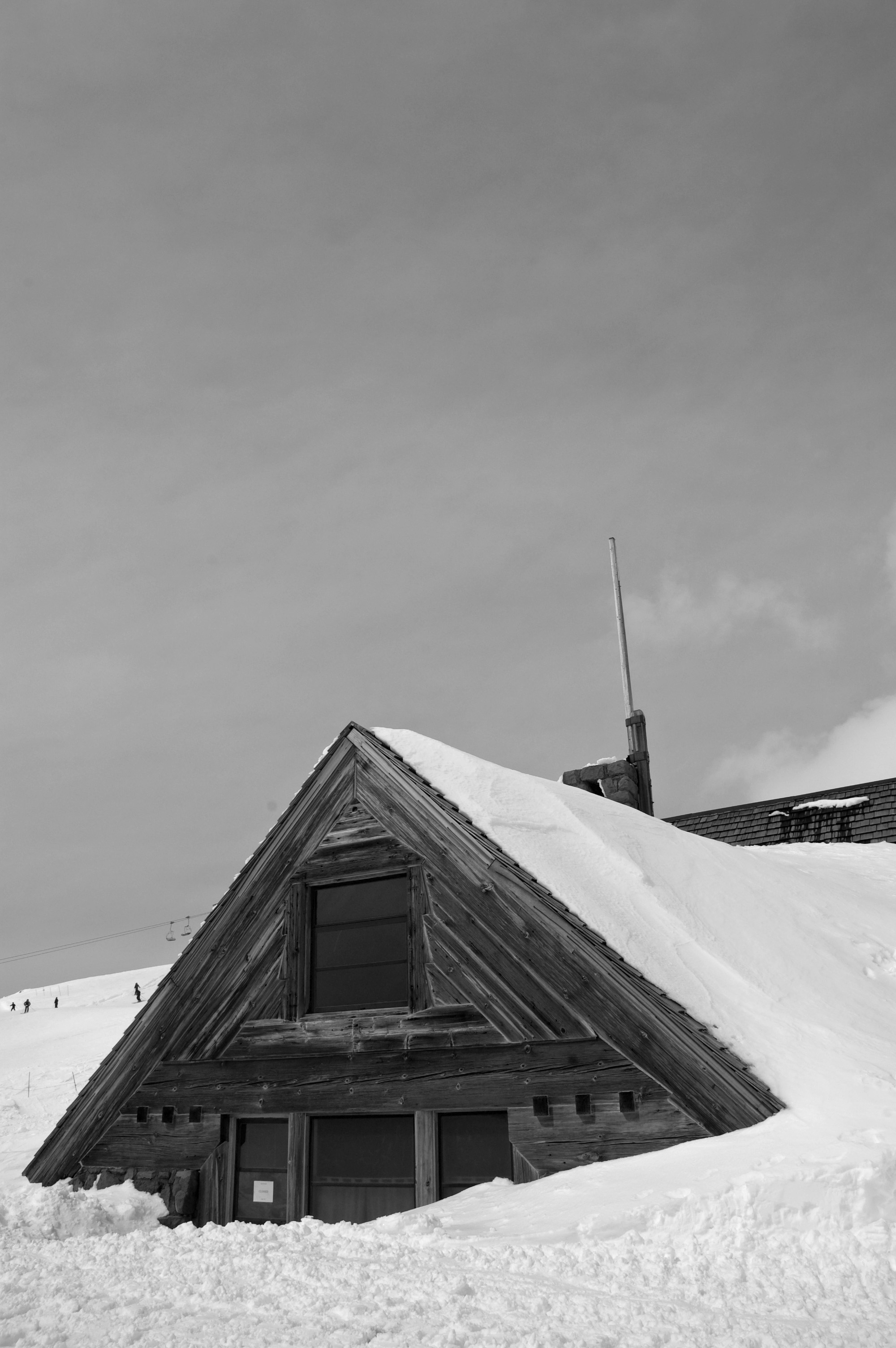
Hood from just above Silcox Hut.

A reminder

The first of probably a few reminders this week about the official launch of On Mount Hood at the Hawthorne Powell’s this Thursday night at 7:30 p.m.! (Not the Burnside Powell’s!)

Sun’s out

After an insufferable amount of gray sky this spring, including an impenetrable bit last weekend that kept my Atlanta friend and his wife from seeing Mount Hood during a three-day visit, the sun has finally won out. It’s beautiful in Portland today, it looks bluebird up at the mountain, and at least as of today, the forecast looks like more of the same for the next few days.

Time to go for a hike.

But because this year has been such a precipitation-filled one, many of the best hikes around the mountain are still buried under feet of snow. According to the Natural Resources Conservation Service, which monitors snow levels among other meteorological statistics, there’s still more than 12 feet of snow at 5,400 feet on Mount Hood, more than 7 feet at 4,400 feet on the north side, and still close to 3 feet south of the mountain at 3,800 feet.

Not to fear. There are still plenty of low-elevation walks close to the mountain that can scratch the hiking itch. And if you don’t mind a little snow (or a lot) and are confident and capable on snowshoes, there shouldn’t be much to keep anyone off the trails now that some good weather is at least temporarily here. (Disclaimer: This blog is for information only. Hike at your own risk and only within your own abilities and comfort levels.)

A few of my springtime favorites:

Silcox Hut at about 7,000 feet on the south side of Mount Hood.

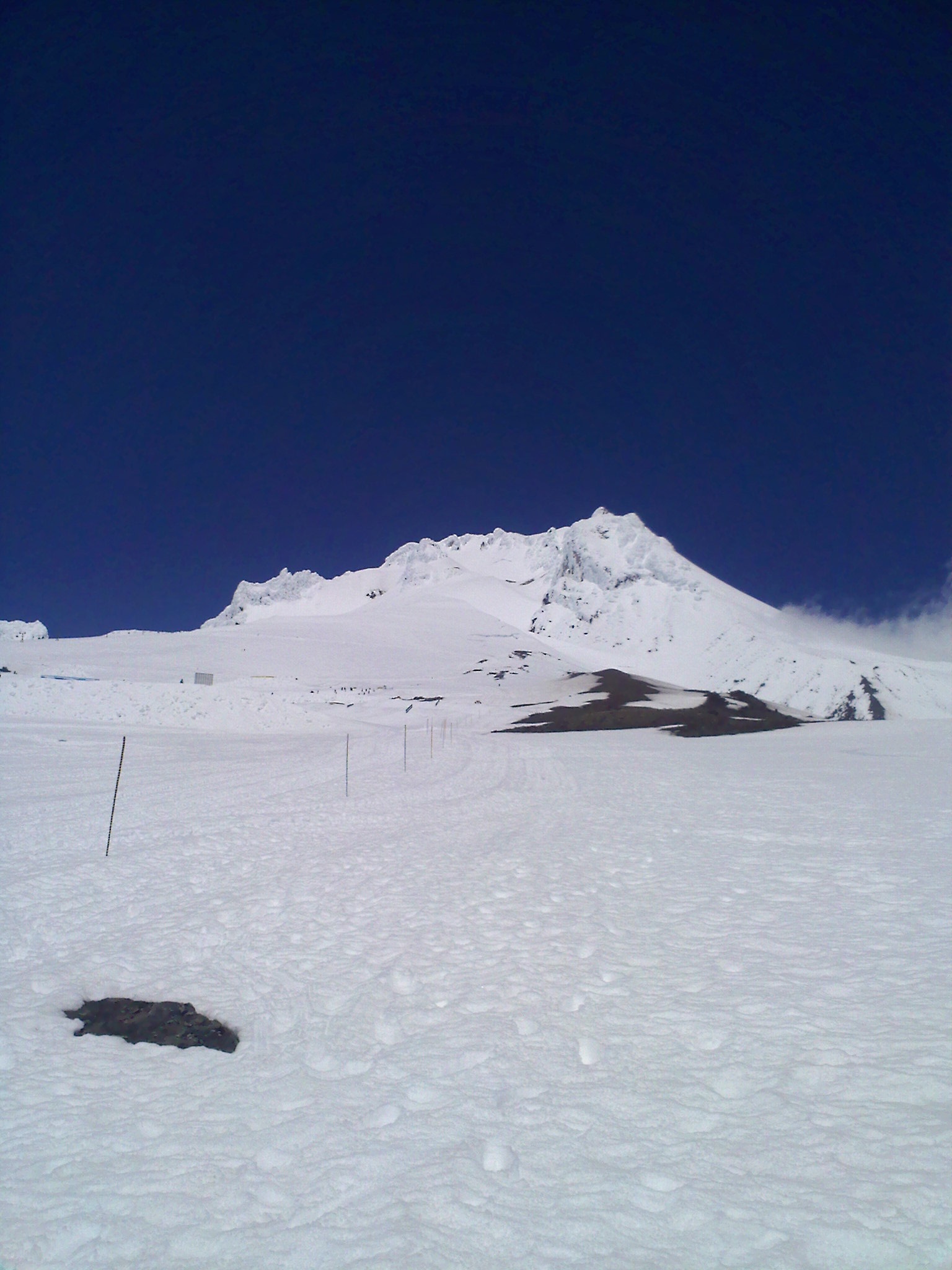
Palmer Snowfield: Nothing like a slog up the lower end of Hood’s South Side climbing route to take in the mountain on a clear day and wake up the climbing legs. It’s  a mile and about 1,000 feet in elevation up fromTimberline Lodge to Silcox Hut, and another mile-plus and about 1,500 more feet up to the top of the Palmer ski lift. Start from Timberline and walk up along the east edge of the ski area.

Salmon River: An easy stroll along the pristine Salmon River, one of five major rivers that call Mount Hood as their source, the Salmon River trail cuts through a massive old growth forest with cedars of unfathomable girth. The entire trail runs about 7 miles, but you can hike in just as far as you’re up for and still get the wilderness gist. More information.

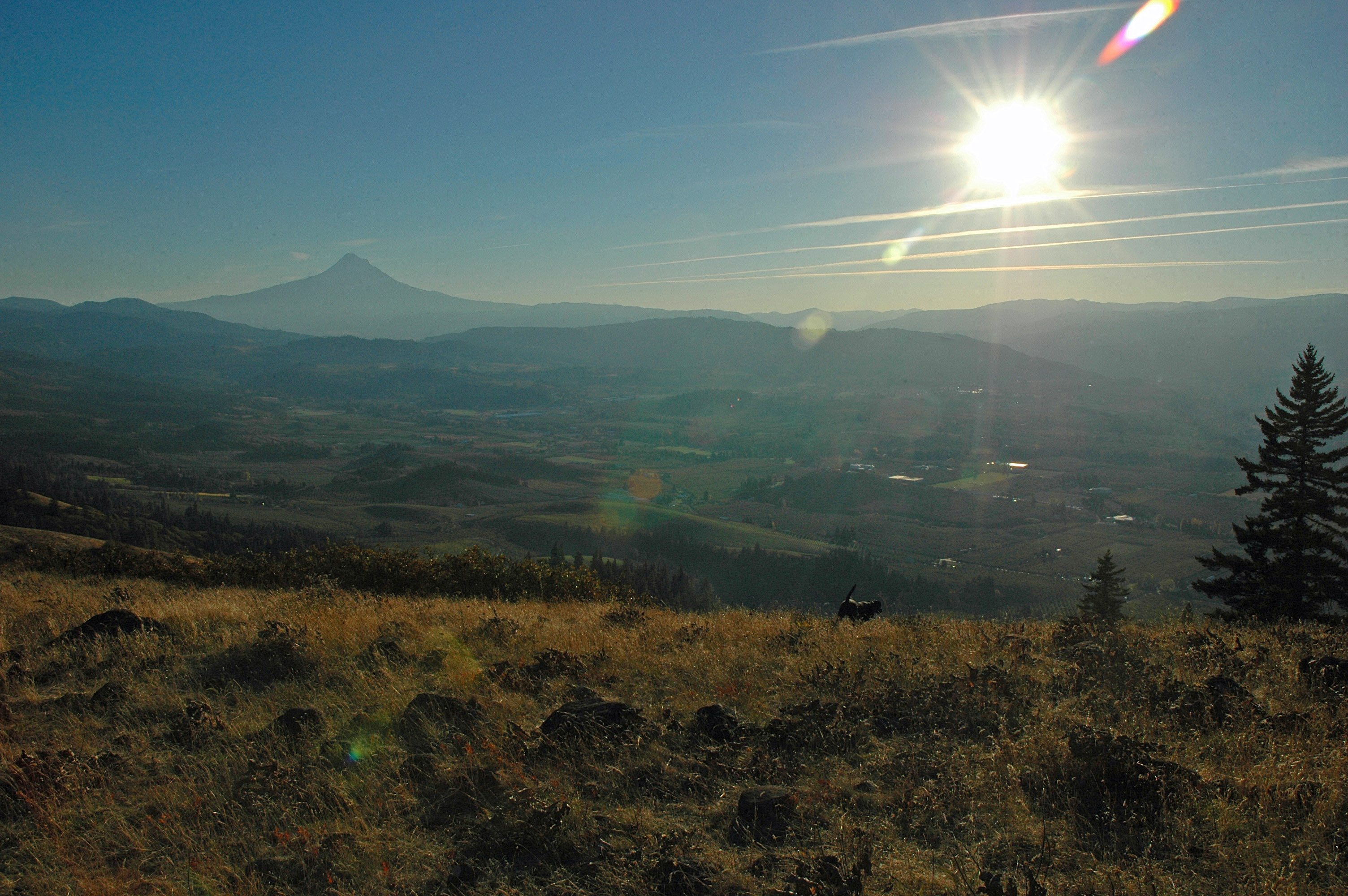
Hood River Mountain: This one’s a little ways away from the mountain, just outside Hood River, but its view of the peak and the entire Hood River Valley is simply jaw-dropping. Just three miles roundtrip and 600 feet up, Hood River mountain affords you a view that usually takes a lot more effort to attain. More information.

Hood River Mountain

Summit of Hood River Mountain, September 2006.